
Deck Contractor in Richland, WA
New Construction Decks South of the City
Richland is unusual among the communities we serve in one specific way: it runs its own electric utility. City of Richland Energy Services provides power inside the city rather than a county PUD, which is a distinction that only matters until you are adding lighting or a heater to a deck and need to know whose rules apply. Everything else about deck work here is shaped by how fast the south end of the city is filling in. Badger Mountain South is a master-planned area covering more than a thousand acres, and the homes going up across it arrive without decks. Those are first builds on flat, recently graded lots, where the questions are ledger attachment into new construction, how the deck relates to a house still under builder warranty, and whether the size pushes past the point where a permit through City of Richland Development Services is required. It is a different conversation entirely from the one we have in the older parts of town.
Aging Decks in Established Neighborhoods
North toward Horn Rapids and the streets nearest downtown, the stock dates from the 1960s through the 1990s and the decks on it are due. That is where replacement and repair work concentrates. The Tapteal West streets sit between those two poles, built largely from 2000 onward, which puts their original decks at roughly the age where softwood surfaces have checked and splintered while the framing underneath is often still perfectly sound. Those are re-deck jobs rather than replacements, and telling one from the other is worth doing properly, since the price difference is substantial and the answer is under the deck rather than on top of it. We check the joists before quoting either one.
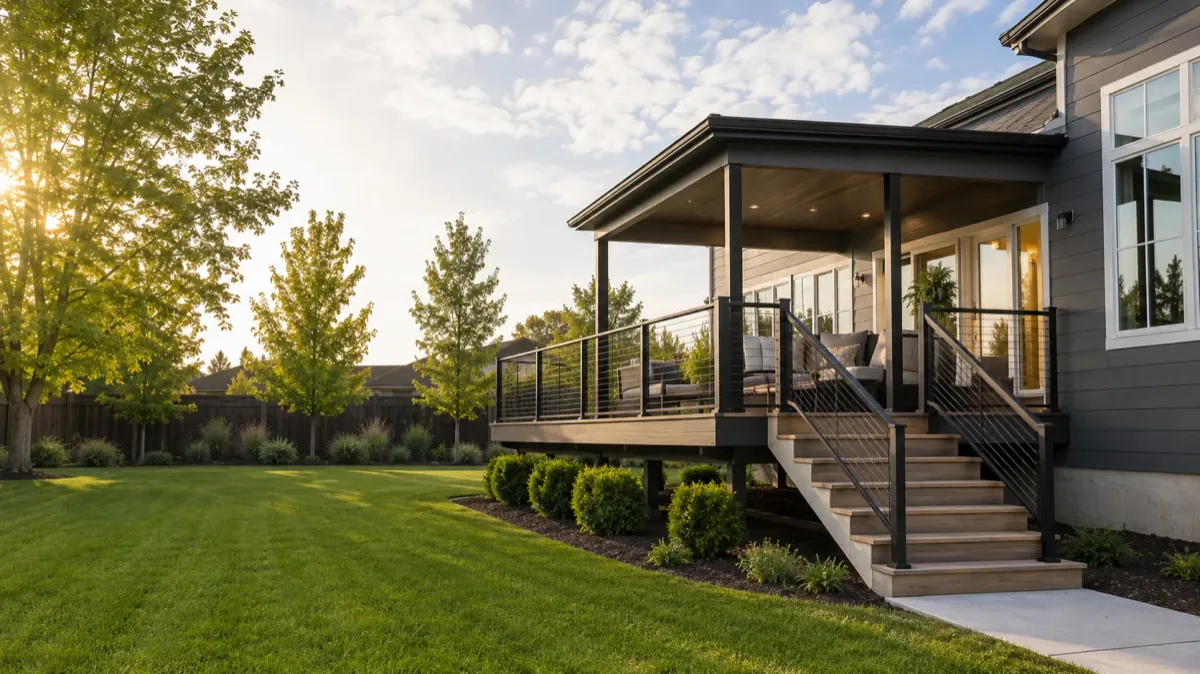
Permits Through City of Richland Development Services
Pool decks in Richland follow the new construction. Lots in Badger Mountain South are large enough and recent enough that pools go in as part of the original landscaping plan rather than being retrofitted decades later, which is an advantage: we can design the surround around the shell and the grading at the same time instead of working around choices somebody already made. Drainage is the item worth settling early. The ground here is dry and takes concentrated runoff poorly, so splash-out needs a deliberate route away from both the pool shell and the house footings rather than being allowed to find its own. Surface temperature is the other decision, since a new surround on an unshaded lot with no established trees takes full afternoon sun from the day it is finished. Lighter boards run measurably cooler underfoot than dark ones.
First Decks on Newly Built Homes
Replacement work in Richland concentrates in Horn Rapids and the older streets near the center, where houses from the 1960s through the 1990s carry decks that have reached the end of a normal service life. The pattern we find repeatedly is a structure that was sound when built and has been quietly compromised at two points: the posts where they meet grade, and the ledger where the deck fastens to the house. Flashing at that wall connection was not standard practice on much of this stock, and water that gets behind it works on the rim joist for years without showing anything from outside. We assess both before quoting. Where the framing turns out to be sound and only the surface has failed, we say so, because a re-deck on good joists is a fraction of the cost of a full rebuild and is a genuinely common outcome on this housing.
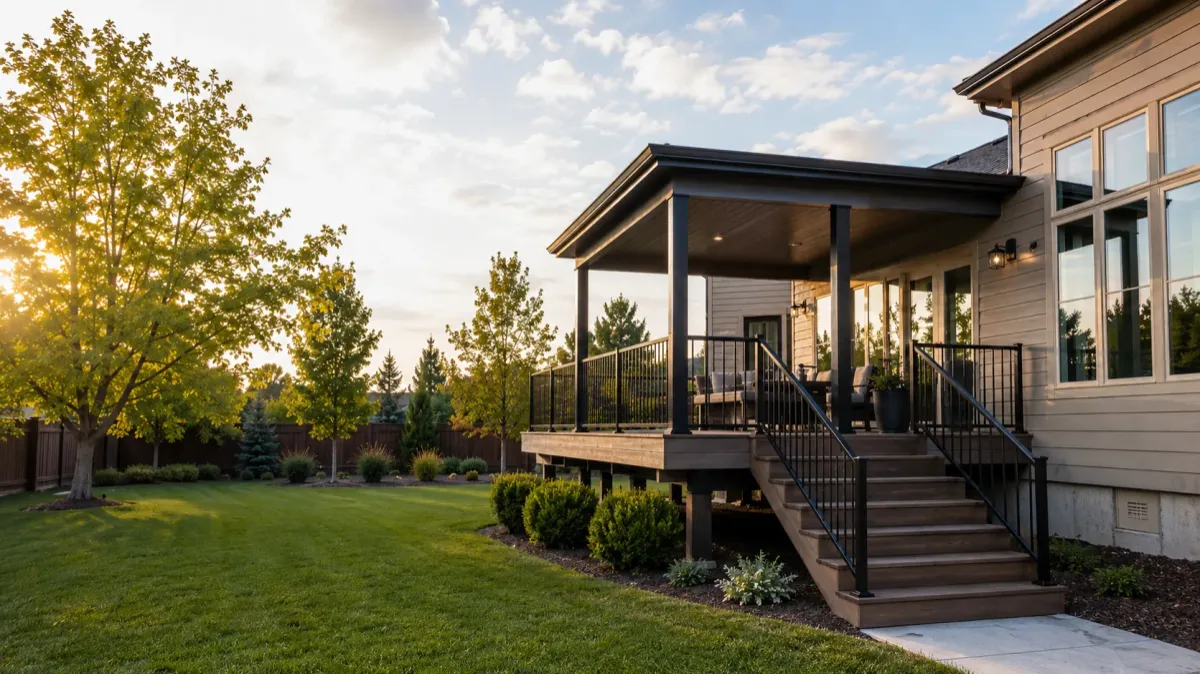
Replacement in Horn Rapids
The Tapteal West streets are where staining demand sits in Richland, and the reason is arithmetic. Homes built from 2000 onward came with softwood decks that are now old enough to have lost their original finish and young enough that the framing has years left. That combination is exactly what refinishing is for. What those decks need is usually a full strip rather than a recoat, because a finish that was applied once and then left through a decade of Eastern Washington sun does not wear evenly, and new stain laid over the damaged layer bonds to that layer instead of to sound wood. We strip back to clean fiber, replace boards that have splintered past sanding, and reset fasteners that seasonal movement has worked loose before any coating goes down.
Decks built for Pasco sun, dry air, and hard winters.
Proudly serving Pasco, Kennewick, Richland, West Richland, Burbank and Finley for 12+ years.
Comprehensive Deck Contractor Services in Pasco
Tailored to Your Needs
Ten services, from a full pool deck build down to a railing swap or a season of stain. Every one of them starts the same way: we look at what the structure sits on, how high it stands above grade, and what the sun does to that side of the house through a Tri-Cities summer.
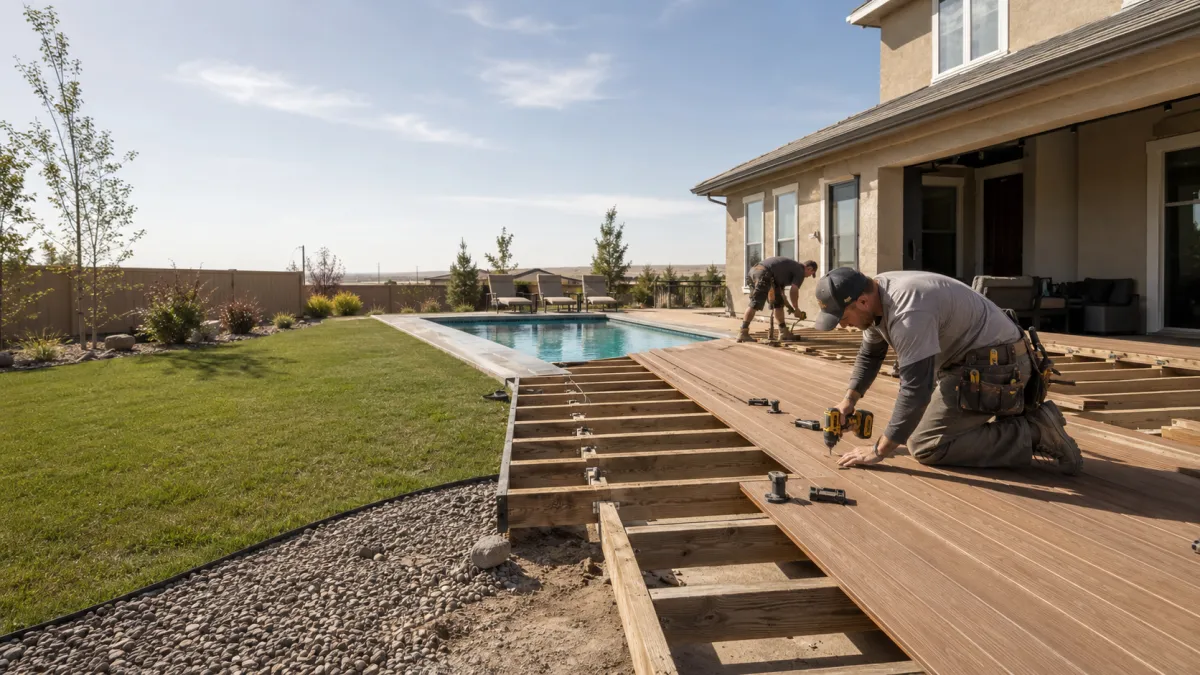
A pool deck must stay grippy when wet and bearable underfoot in full sun.
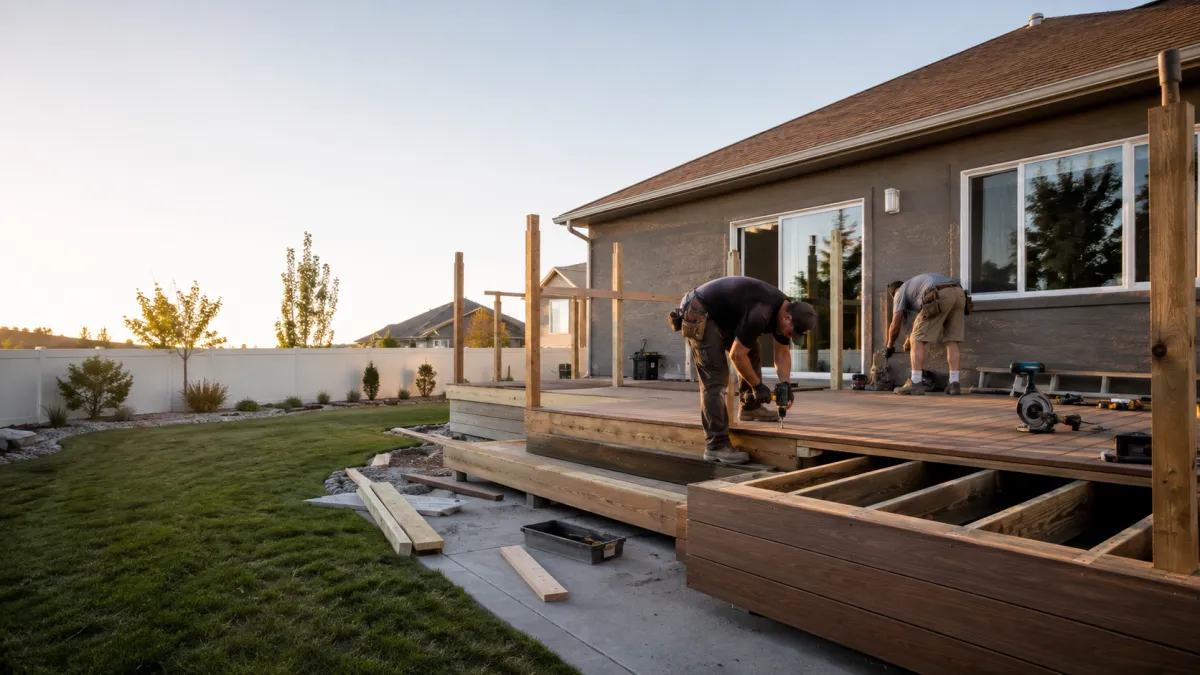
A replacement decides what gets torn out and what framing is still sound.
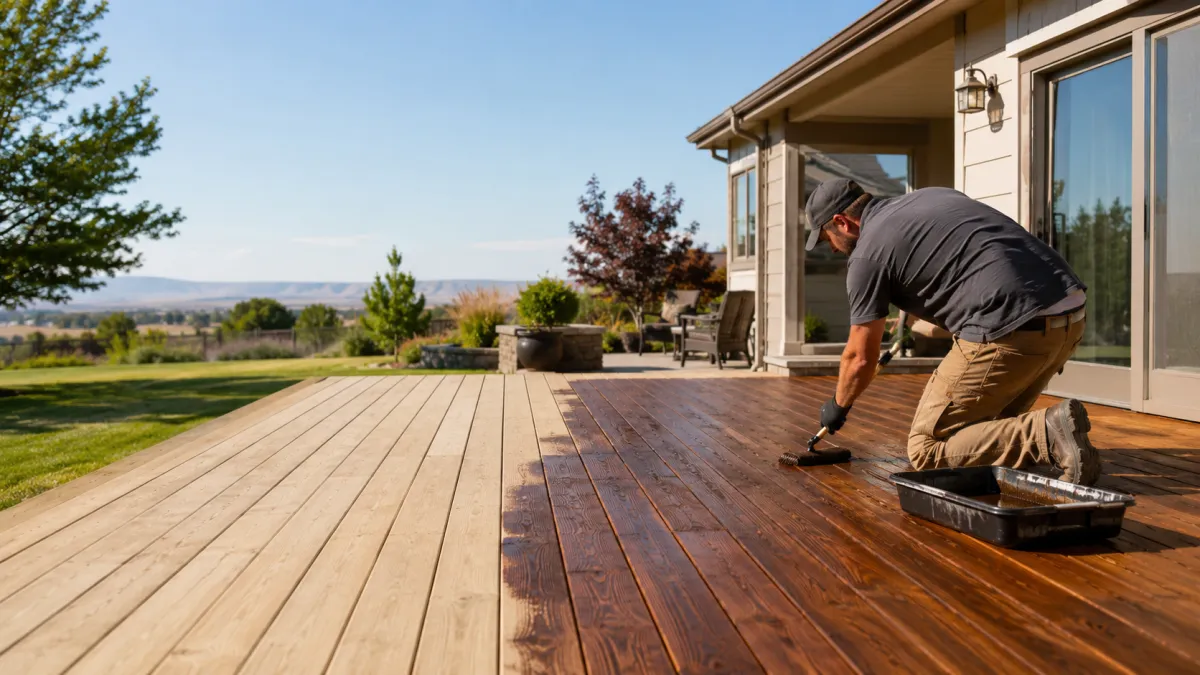
Refinishing strips the failed coating and seals bare wood before summer sun returns.
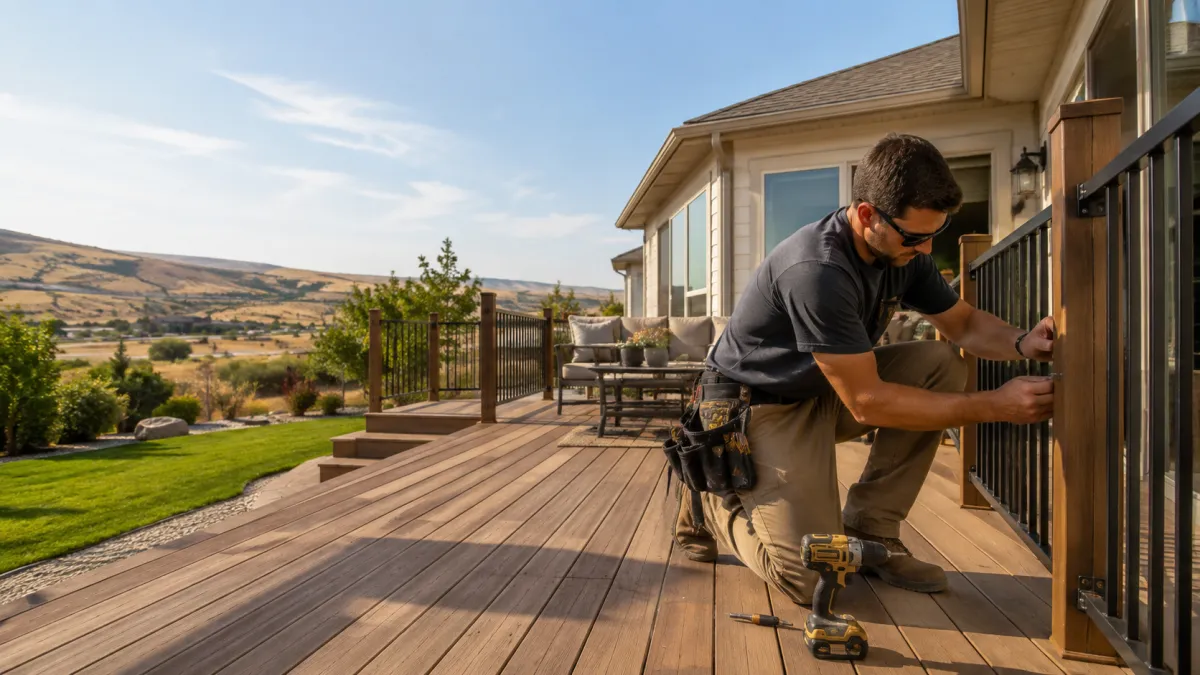
A railing is a safety component whose strength depends on what it fastens to.
A new deck build starts with footings, grade, and the height above ground.
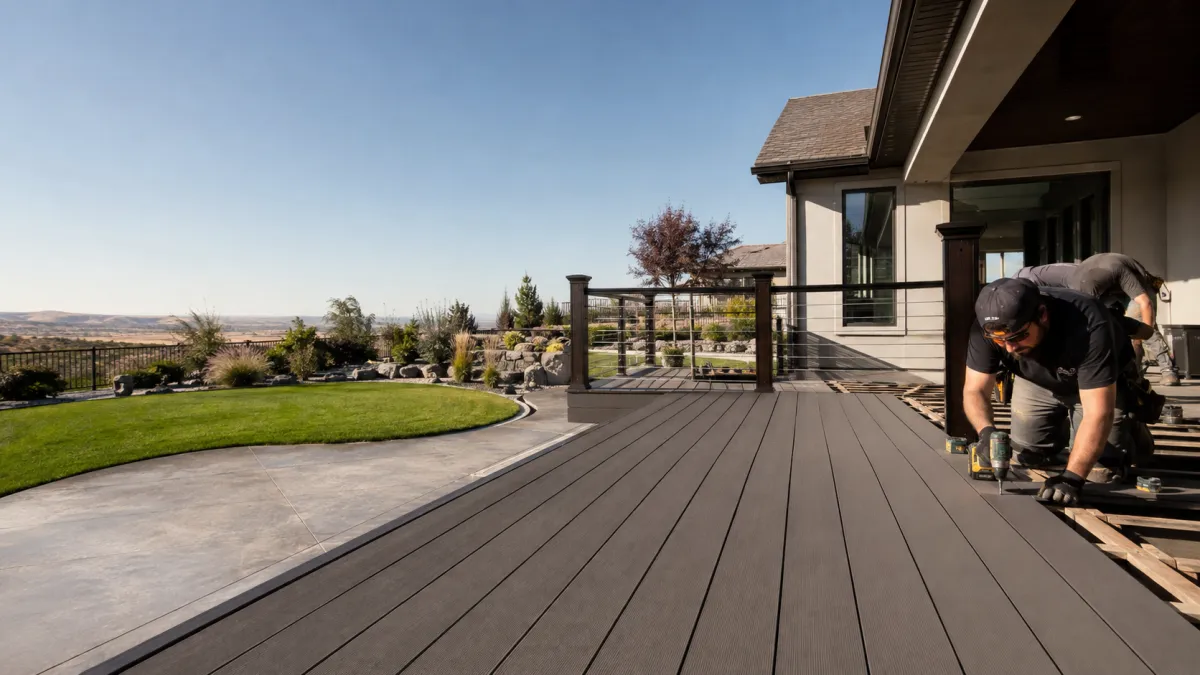
Composite removes the finish schedule but demands correct gapping and hidden fastening.
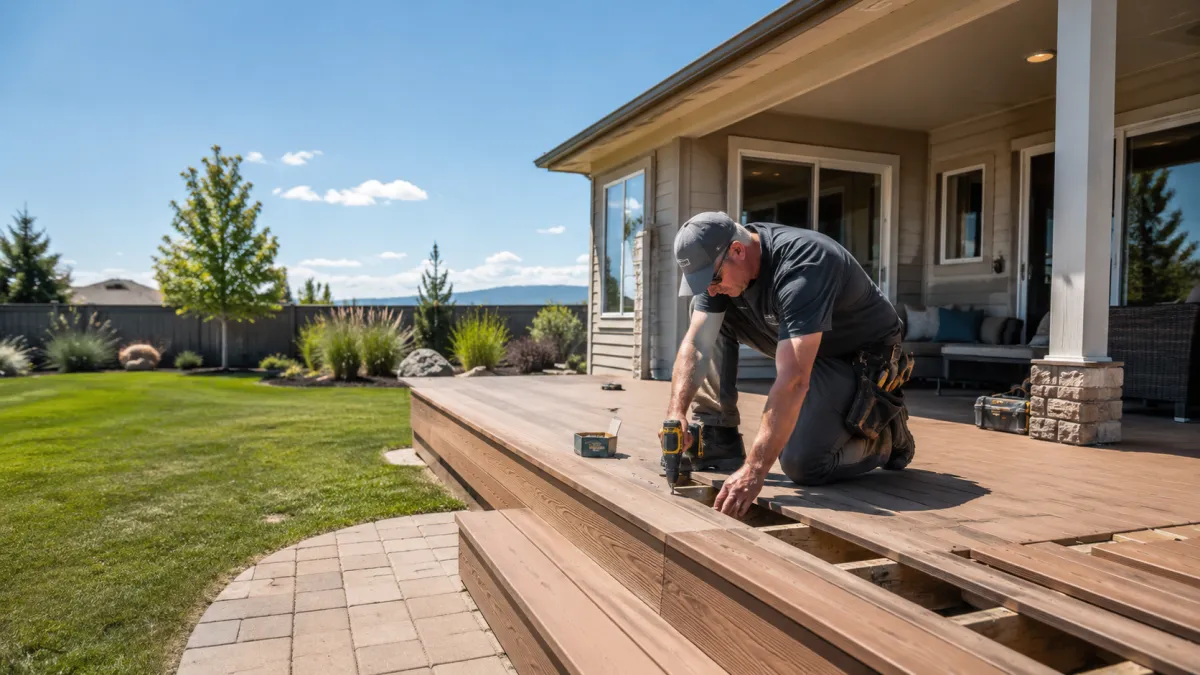
Repair addresses the failed component and leaves sound structure in place.
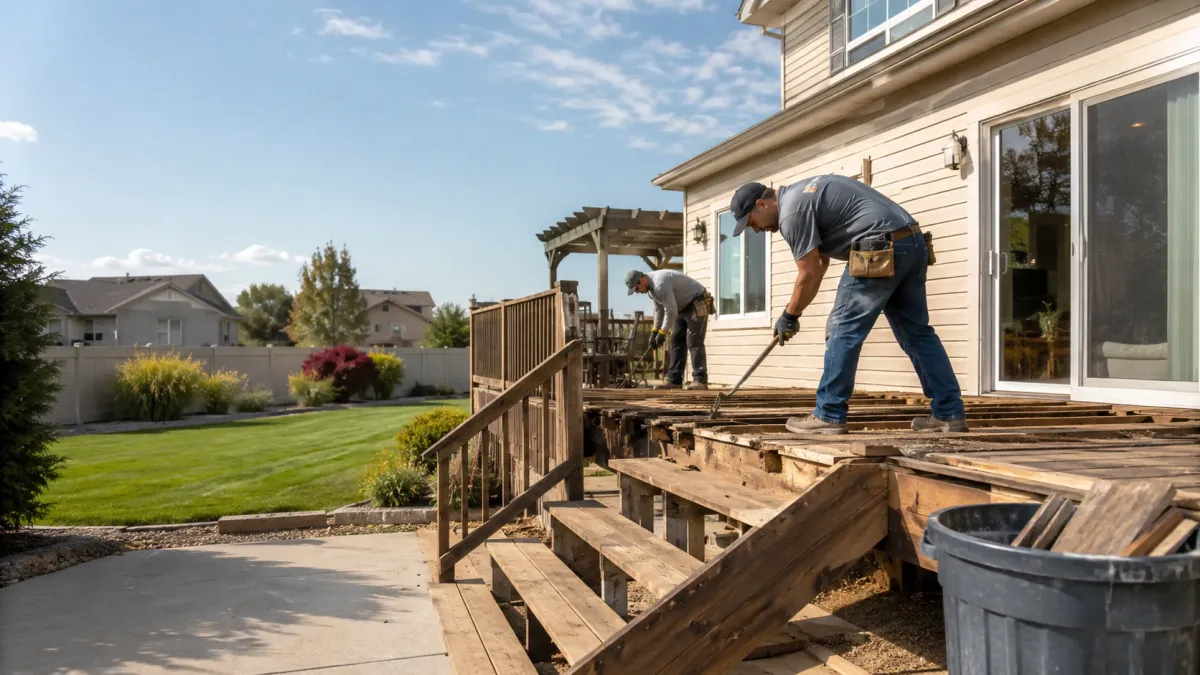
Removal takes out the structure and leaves the site ready for whatever follows.
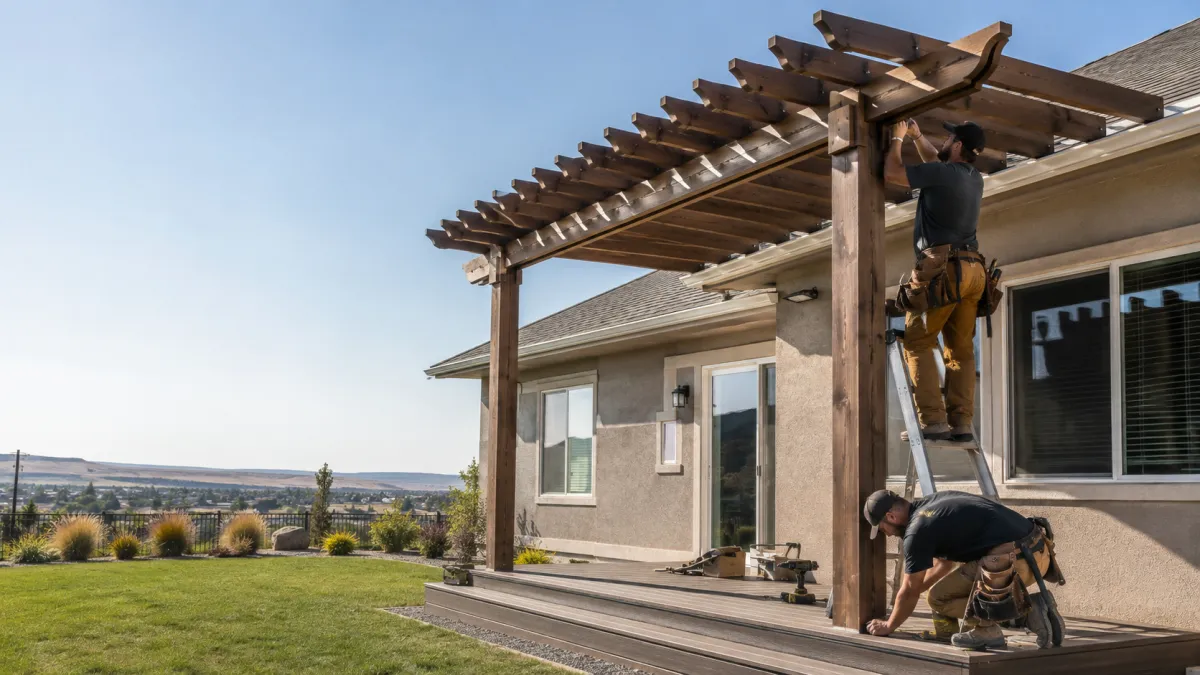
A pergola casts useful shade only if its slats match the sun angle.
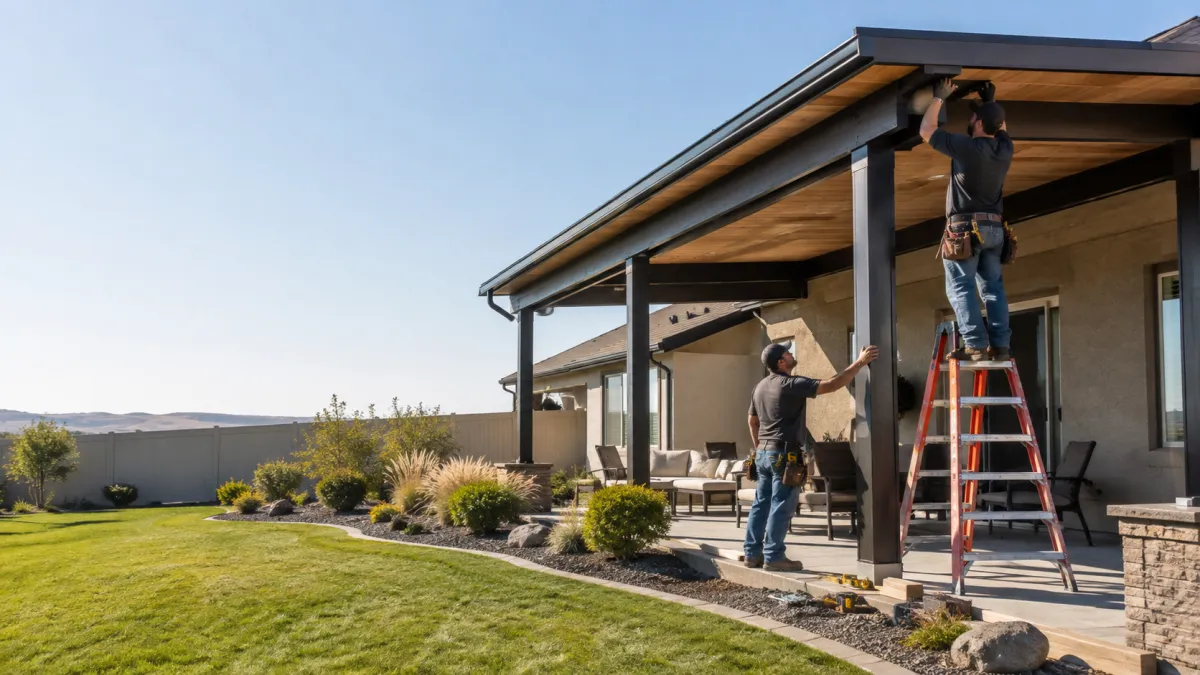
A solid cover blocks sun completely and has to shed water somewhere deliberate.
Frequently Asked Questions
Deck Contractor can be complex, and we’re here to provide answers to common questions. Here are some frequently asked questions from our clients.
Frequently Asked Questions about deck contractor Pasco WA
How much does a deck cost in Pasco, WA?
There is no single price for a Pasco deck. Cost follows the square footage, the height above grade, whether the framing underneath can be reused, the decking material, and whether the railing is wood, cable, or aluminum. A ground-level platform in an existing footprint and an elevated deck with new footings are not comparable jobs. We price after a walkthrough and measurements, not over the phone.
Do I need a permit to build a deck in Pasco, WA?
It depends on two numbers. Pasco Municipal Code exempts decks under 200 sq ft that also sit under 30 inches above the ground, so a small ground-level platform can go in without a permit. Cross either threshold and you need one from the City of Pasco Building Division, where residential permits run a five to seven business day review. We confirm which side of that line your project falls on before quoting it.
What is the best decking material for hot weather?
For a Pasco summer, the honest answer is that surface color matters more than material category. Lighter boards run cooler underfoot than dark ones, in composite and in wood alike. Composite avoids the annual splintering and checking that dry heat causes in softwood, while a good hardwood or cedar stays cooler than most dark composites. We match the material to how the deck is oriented and how often it is used barefoot.
How do you pick a deck contractor in Pasco?
Ask three things. Whether they build decks specifically or take them alongside fencing and general contracting, whether they will tell you the permit threshold before quoting, and whether their past work is in your climate rather than on the wet side of the state. A crew that cannot answer the permit question in the first conversation has not looked at your project yet.
How long does it take to build a deck in Pasco?
Schedule follows the permit review, the footing and framing inspections, whether concrete has to cure before framing starts, and lead times on decking and railing. A railing replacement on sound framing and a new elevated deck that needs fresh footings sit at opposite ends of that range. We give you the sequence in writing so you can see which steps are ours and which belong to the city.
What is the difference between composite and wood decking?
Wood is cheaper up front and needs a finish schedule. Composite costs more at install and skips the stripping and staining. In this climate the gap widens, because dry heat and hard sun push a softwood deck toward recoating more often than the same deck would need on the coast. The right choice depends on whether you would rather spend the money once or spread it across seasons of maintenance.
Still Have Questions About deck contractor Pasco WA?
Speak With a Trusted Deck Contractor Expert Today.
The Trusted Deck Contractor Expert Near You
Ready to hear more about expert services at Pasco Deck Contractors?
Contact us today to receive a detailed, no-obligation quote.
Serving West Pasco, Riverview, Road 68, Chapel Hill, Broadmoor, Downtown Pasco & Greater Pasco
Mon–Fri 7AM–5PM | Sat 8AM–3PM | Sun Closed


