
Deck Contractor in Kennewick, WA
Hillside Lots and Elevated Deck Framing
Kennewick decks split into two very different jobs depending on which part of the city you are in. On the slopes below Badger Mountain Centennial Preserve and through parts of Canyon Lakes, lots fall away from the house, and a deck that would sit two steps off the ground on flat land ends up standing eight or ten feet above grade at its outer edge. That changes everything structural: footing depth, post sizing, lateral bracing, and whether a railing is code-required becomes a settled question rather than an open one. It also puts the project firmly over the height threshold, so permits through City of Kennewick Building Services are part of the schedule rather than an optional step. In Southridge, where the growth has been newest, the situation reverses. Lots are flatter and the houses are recent, so the deck is usually a first build rather than a replacement, and the constraint is matching a structure to a house that is still under warranty. Kennewick sits in Benton PUD territory, which matters if deck lighting is part of the plan.
New Construction Decks in Southridge
Housing age is the other divide. Around Metaline and the older core streets, the stock runs from the 1960s through the 1980s, and decks on those homes are frequently second or third generation. What we find underneath is usually a mix: framing added at different times, fastener types that changed between decades, and posts that were set before anyone was flashing ledgers as a matter of course. Those are replacement assessments rather than repair calls, and we get underneath before pricing them. Closer to Bridge to Bridge and the river, lot sizes tighten and access for materials becomes the practical limit on how a build gets sequenced. On those streets we work out the delivery and staging plan before quoting the labour, because it genuinely changes the schedule.
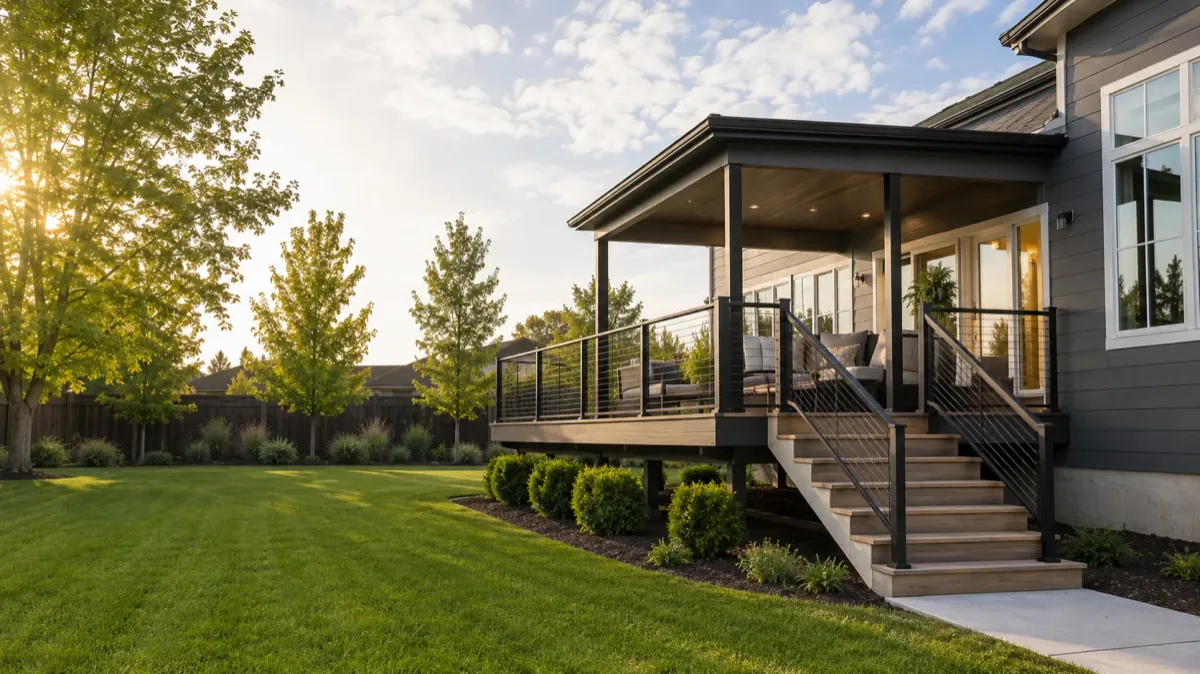
Footings on Sloped Ground
Pool decks in Kennewick concentrate where the lots are large enough to hold a pool, which in practice means Canyon Lakes and the newer stretches of Southridge. On the Canyon Lakes side, many of those lots carry some slope, and a pool surround on sloped ground has a drainage problem that a flat lot does not. Splash-out and runoff both move downhill, and if the deck is not pitched deliberately, that water collects at the low corner against footings or the pool shell. We set the fall across the surround before choosing a board layout. Surface temperature is the second decision, since these are unshaded spaces used barefoot through the afternoon, and board color moves surface heat more than any brand claim does. Where the surround crosses the height threshold at its outer edge, it goes through City of Kennewick Building Services along with the rest of the structure.
Permits Through City of Kennewick Building Services
Deck replacement is the most common call we get from the older Kennewick core. Homes around Metaline and the streets nearest Bridge to Bridge are into their fifth or sixth decade, and a deck built for one of them in the 1980s has now been through forty summers of direct sun and forty winters of freeze. The failures cluster in two places. Posts set at grade hold moisture at the contact point and rot from the bottom while looking sound from above, and ledgers installed before flashing was standard practice have often been feeding water into the rim joist for years. Neither shows on the surface. We get underneath, probe the posts, and check the wall connection before deciding whether you are looking at a replacement or a re-deck on sound framing, which costs far less and is the answer more often than people expect.
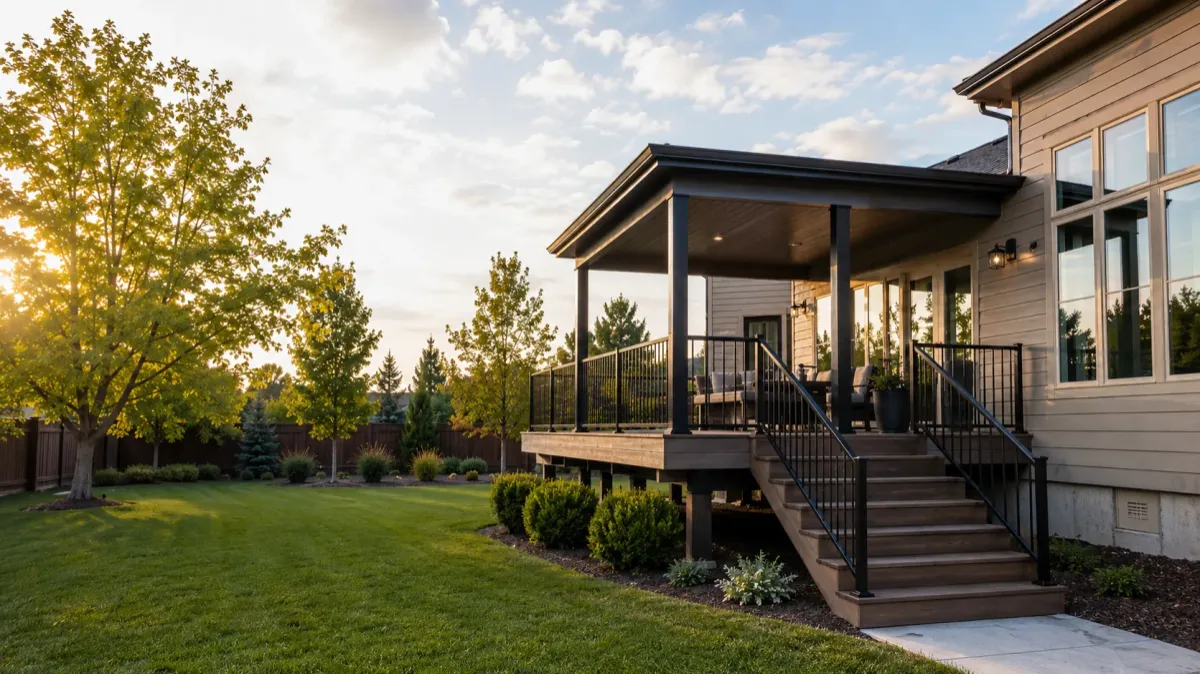
Benton PUD Territory and Deck Lighting
Staining schedules in Kennewick vary more by exposure than by neighborhood. A deck on the west or south face of a home on the slopes below Badger Mountain Centennial Preserve takes hard, unobstructed afternoon sun with no tree cover to soften it, and a softwood surface in that position gives up its finish considerably faster than the same deck would on a shaded north side in Canyon Lakes. We assess the specific deck rather than quoting an interval from a chart. The timing rule holds citywide though: stain goes down in spring or the cool end of fall, because a board surface in full summer sun here is hot enough that a penetrating finish flashes off before it can soak in. That produces a film that peels within a season, which is the usual reason a deck looks poor a year after it was refinished.
Comprehensive Deck Contractor Services in Pasco
Tailored to Your Needs
Ten services, from a full pool deck build down to a railing swap or a season of stain. Every one of them starts the same way: we look at what the structure sits on, how high it stands above grade, and what the sun does to that side of the house through a Tri-Cities summer.
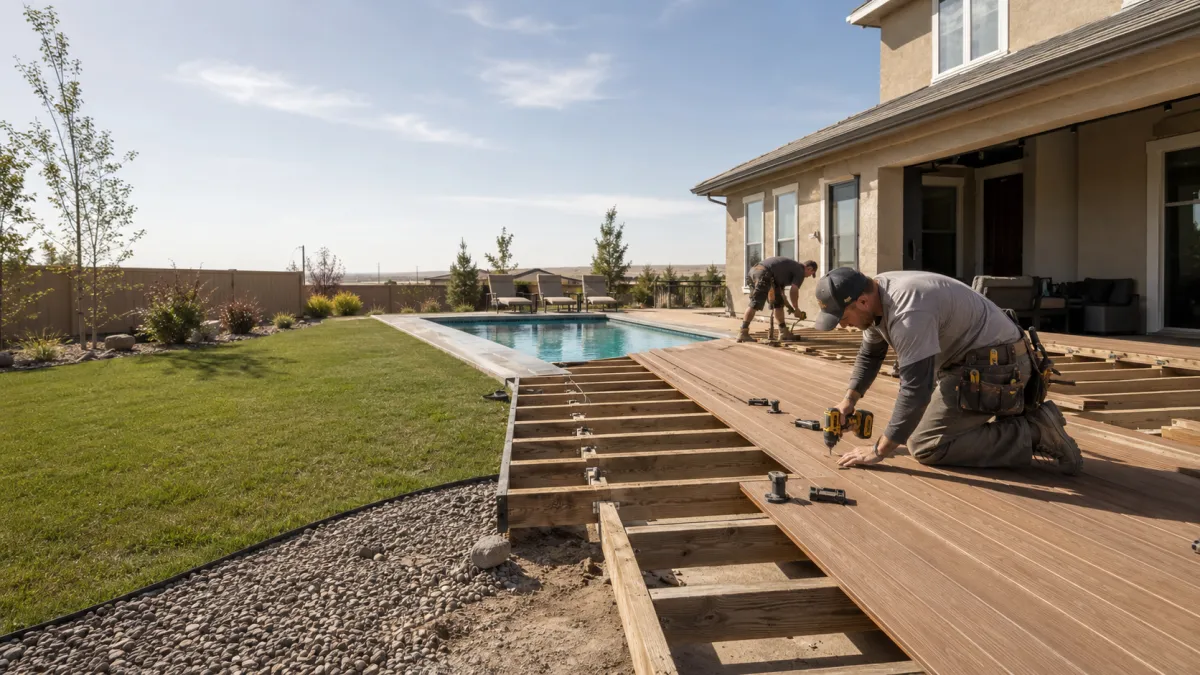
A pool deck must stay grippy when wet and bearable underfoot in full sun.
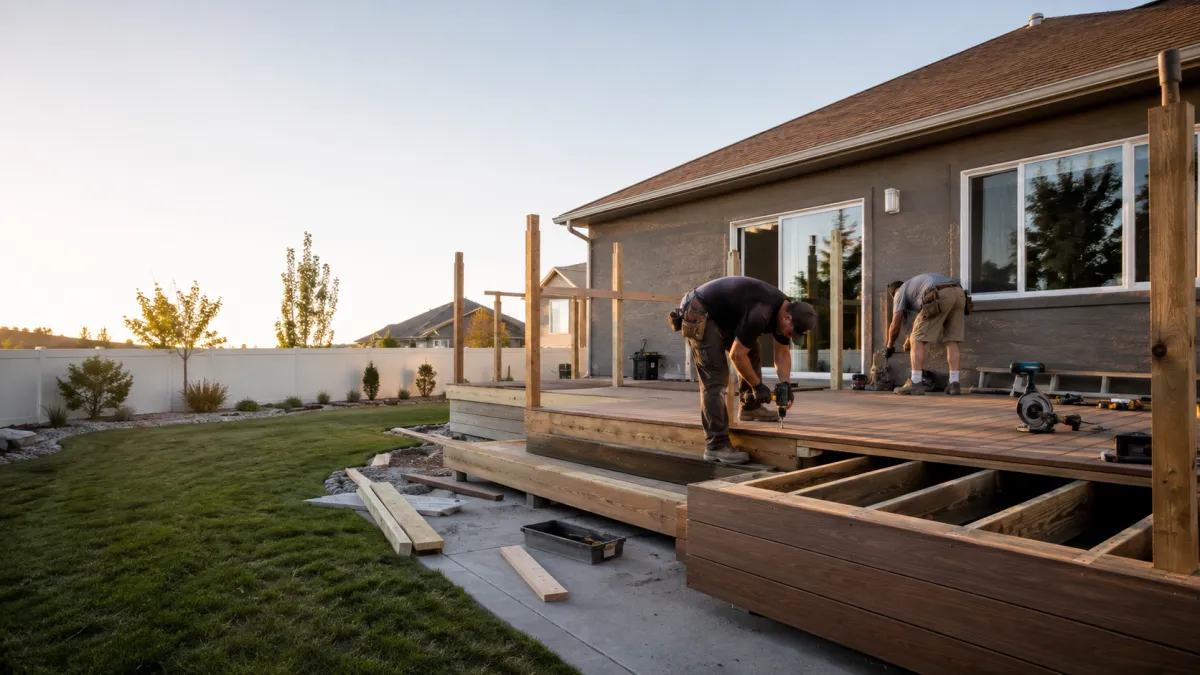
A replacement decides what gets torn out and what framing is still sound.
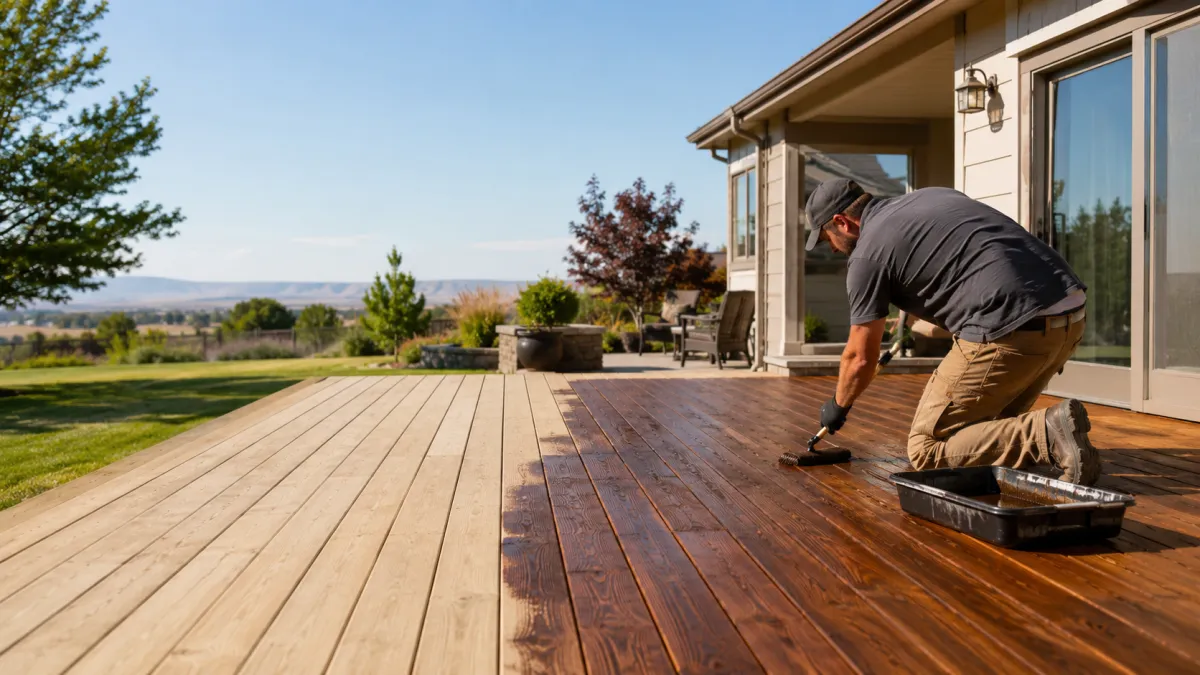
Refinishing strips the failed coating and seals bare wood before summer sun returns.
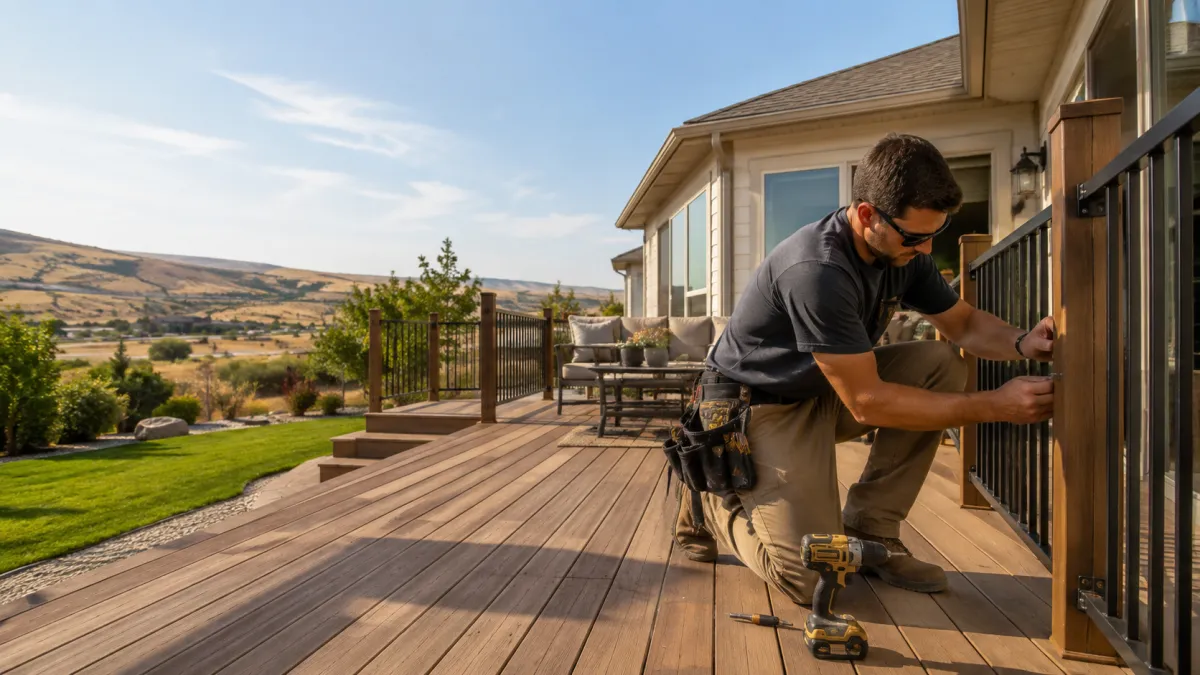
A railing is a safety component whose strength depends on what it fastens to.
A new deck build starts with footings, grade, and the height above ground.
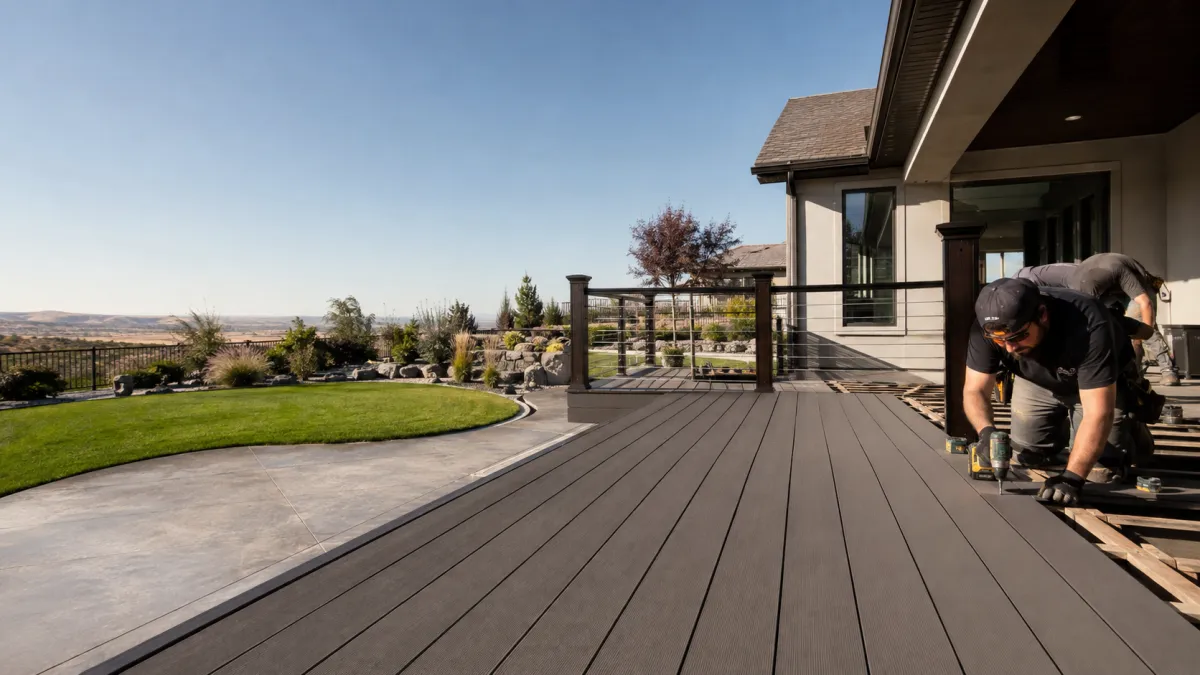
Composite removes the finish schedule but demands correct gapping and hidden fastening.
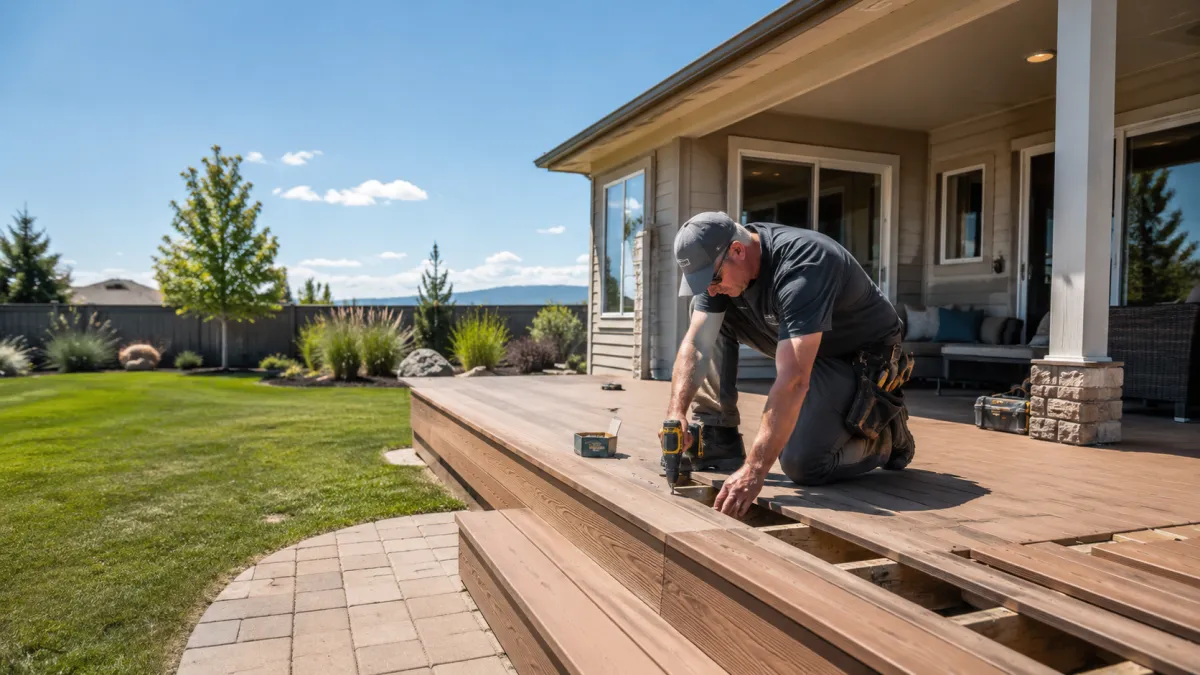
Repair addresses the failed component and leaves sound structure in place.
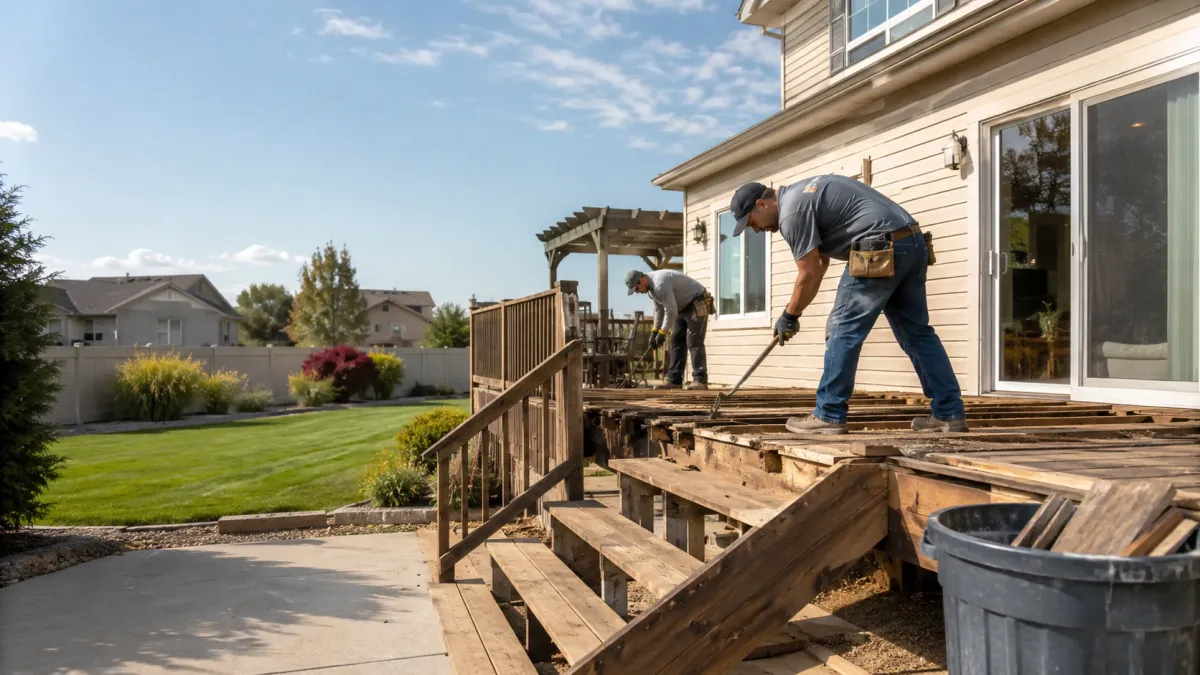
Removal takes out the structure and leaves the site ready for whatever follows.
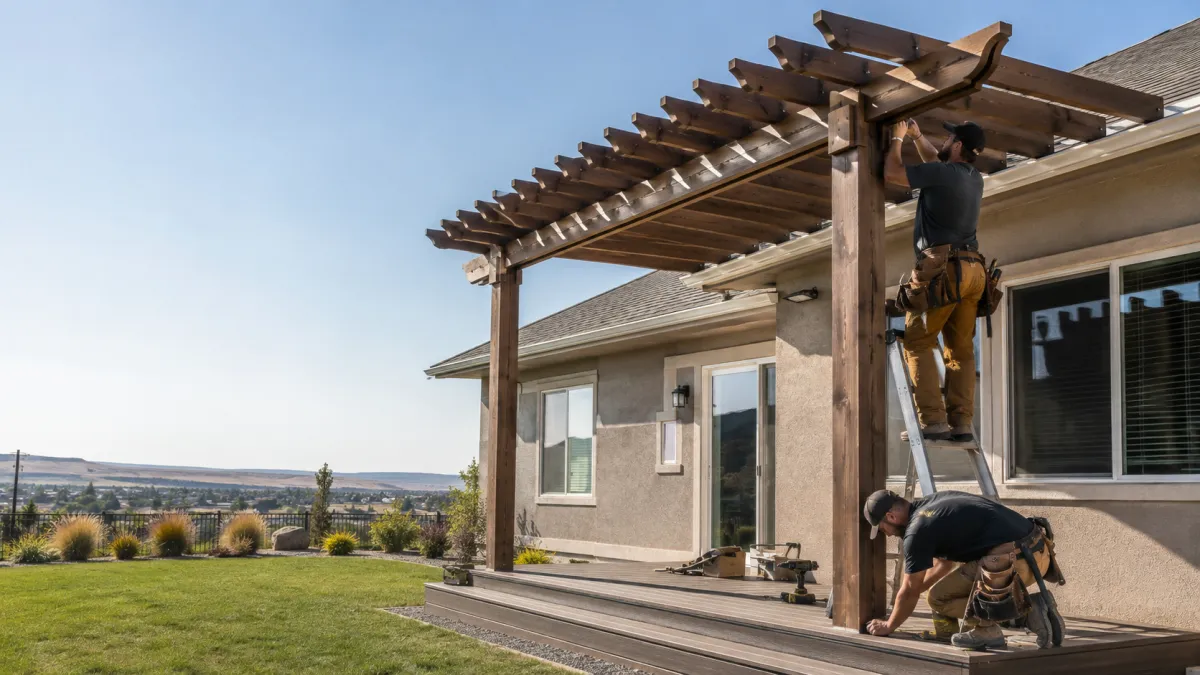
A pergola casts useful shade only if its slats match the sun angle.
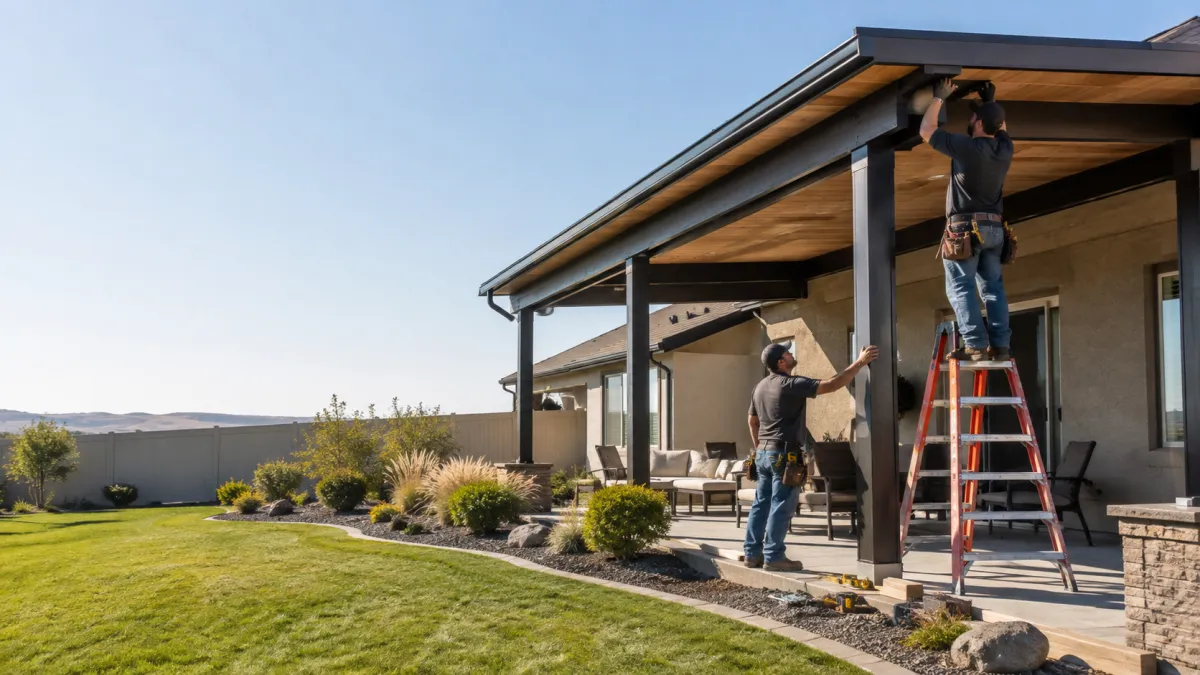
A solid cover blocks sun completely and has to shed water somewhere deliberate.
Frequently Asked Questions
Deck Contractor can be complex, and we’re here to provide answers to common questions. Here are some frequently asked questions from our clients.
Frequently Asked Questions about deck contractor Pasco WA
How much does a deck cost in Pasco, WA?
There is no single price for a Pasco deck. Cost follows the square footage, the height above grade, whether the framing underneath can be reused, the decking material, and whether the railing is wood, cable, or aluminum. A ground-level platform in an existing footprint and an elevated deck with new footings are not comparable jobs. We price after a walkthrough and measurements, not over the phone.
Do I need a permit to build a deck in Pasco, WA?
It depends on two numbers. Pasco Municipal Code exempts decks under 200 sq ft that also sit under 30 inches above the ground, so a small ground-level platform can go in without a permit. Cross either threshold and you need one from the City of Pasco Building Division, where residential permits run a five to seven business day review. We confirm which side of that line your project falls on before quoting it.
What is the best decking material for hot weather?
For a Pasco summer, the honest answer is that surface color matters more than material category. Lighter boards run cooler underfoot than dark ones, in composite and in wood alike. Composite avoids the annual splintering and checking that dry heat causes in softwood, while a good hardwood or cedar stays cooler than most dark composites. We match the material to how the deck is oriented and how often it is used barefoot.
How do you pick a deck contractor in Pasco?
Ask three things. Whether they build decks specifically or take them alongside fencing and general contracting, whether they will tell you the permit threshold before quoting, and whether their past work is in your climate rather than on the wet side of the state. A crew that cannot answer the permit question in the first conversation has not looked at your project yet.
How long does it take to build a deck in Pasco?
Schedule follows the permit review, the footing and framing inspections, whether concrete has to cure before framing starts, and lead times on decking and railing. A railing replacement on sound framing and a new elevated deck that needs fresh footings sit at opposite ends of that range. We give you the sequence in writing so you can see which steps are ours and which belong to the city.
What is the difference between composite and wood decking?
Wood is cheaper up front and needs a finish schedule. Composite costs more at install and skips the stripping and staining. In this climate the gap widens, because dry heat and hard sun push a softwood deck toward recoating more often than the same deck would need on the coast. The right choice depends on whether you would rather spend the money once or spread it across seasons of maintenance.
Still Have Questions About deck contractor Pasco WA?
Speak With a Trusted Deck Contractor Expert Today.
What Our Satisfied Clients Have to Say About Pasco Deck Contractors
We pride ourselves on delivering great results and experiences for each client. Hear directly from home and business owners who’ve trusted us with their Deck Contractor needs.
The Trusted Deck Contractor Expert Near You
Ready to hear more about expert services at Pasco Deck Contractors?
Contact us today to receive a detailed, no-obligation quote.
Serving West Pasco, Riverview, Road 68, Chapel Hill, Broadmoor, Downtown Pasco & Greater Pasco
Mon–Fri 7AM–5PM | Sat 8AM–3PM | Sun Closed


