
Composite Deck Installation in Pasco, WA
Trading Maintenance Seasons for Upfront Cost
Composite solves the maintenance problem that dry heat creates in softwood. It does not splinter, it does not check along the grain, and it never needs stripping and re-staining. In a climate where a wood deck in full sun works hard against its finish, that is a real advantage and it is why composite is worth the higher install cost for a lot of homeowners here. It introduces two problems of its own, though, and both are installation problems rather than product problems. The first is heat. Composite absorbs and holds solar heat differently from wood, and a dark board on a south-facing deck in a Pasco July gets hot enough that the color choice becomes a usability decision rather than a style one. Lighter boards run meaningfully cooler. We raise that before you pick a color, not after. The second is movement. Composite expands and contracts with temperature more than wood does, and our daily temperature swing is wide. Boards installed with wood-appropriate gapping will buckle at the ends or open up gaps that were never intended. Correct end gapping, correct side spacing, and a hidden fastener system that lets boards move rather than pinning them are what separate a composite deck that stays flat from one that goes wavy in its third summer.
We install over new framing or over existing framing that has been assessed and found sound, since composite is heavier than most softwood decking and the joist spacing has to suit it. Spacing often needs tightening from what a wood deck used. The sequence is framing assessment, any joist work, then decking with the gapping set to the board's specification for our temperature range. You get the board and color recommendation with the surface-heat tradeoff stated plainly, the joist spacing requirement, and the fastening system before ordering.
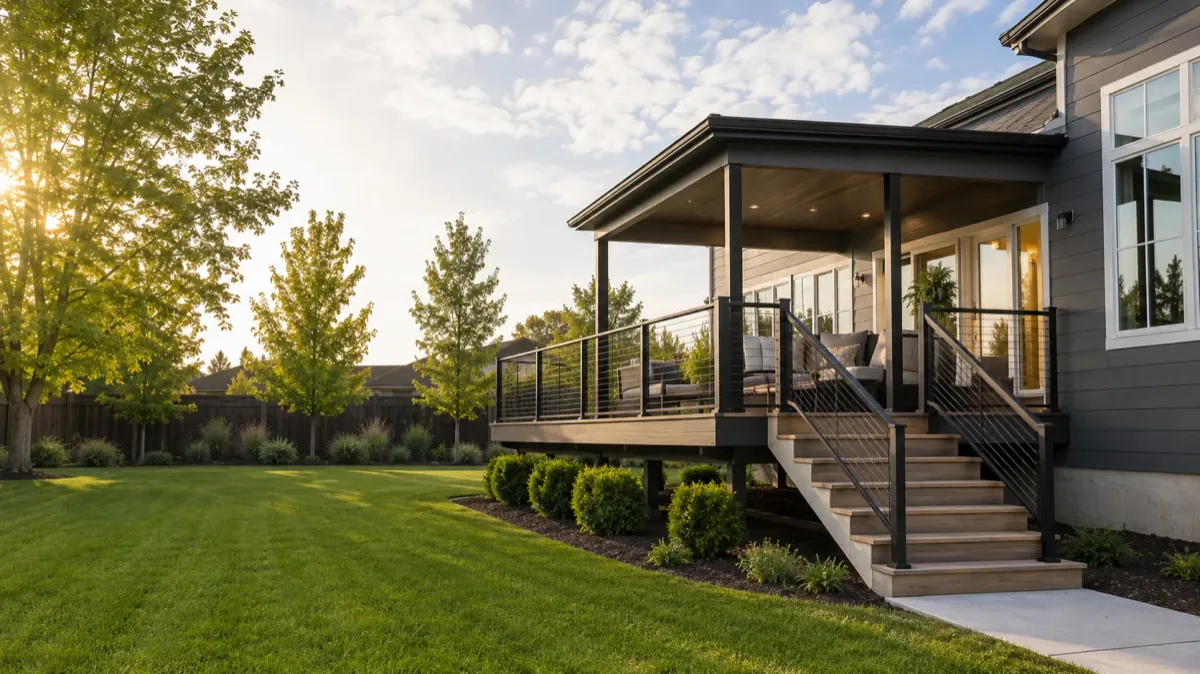
What's Included in our Composite Deck Installation service?
Board and Color Selection
Weighs surface temperature against appearance, since darker boards run hotter underfoot.
Expansion Gapping
Sets end and side spacing for boards that move more than wood with temperature.
Hidden Fastener Systems
Keeps the surface clear of screw heads while allowing the boards to move freely.
Proudly serving Pasco, Kennewick, Richland, West Richland, Burbank and Finley for 12+ years.
Comprehensive Deck Contractor Services in Pasco
Tailored to Your Needs
Ten services, from a full pool deck build down to a railing swap or a season of stain. Every one of them starts the same way: we look at what the structure sits on, how high it stands above grade, and what the sun does to that side of the house through a Tri-Cities summer.
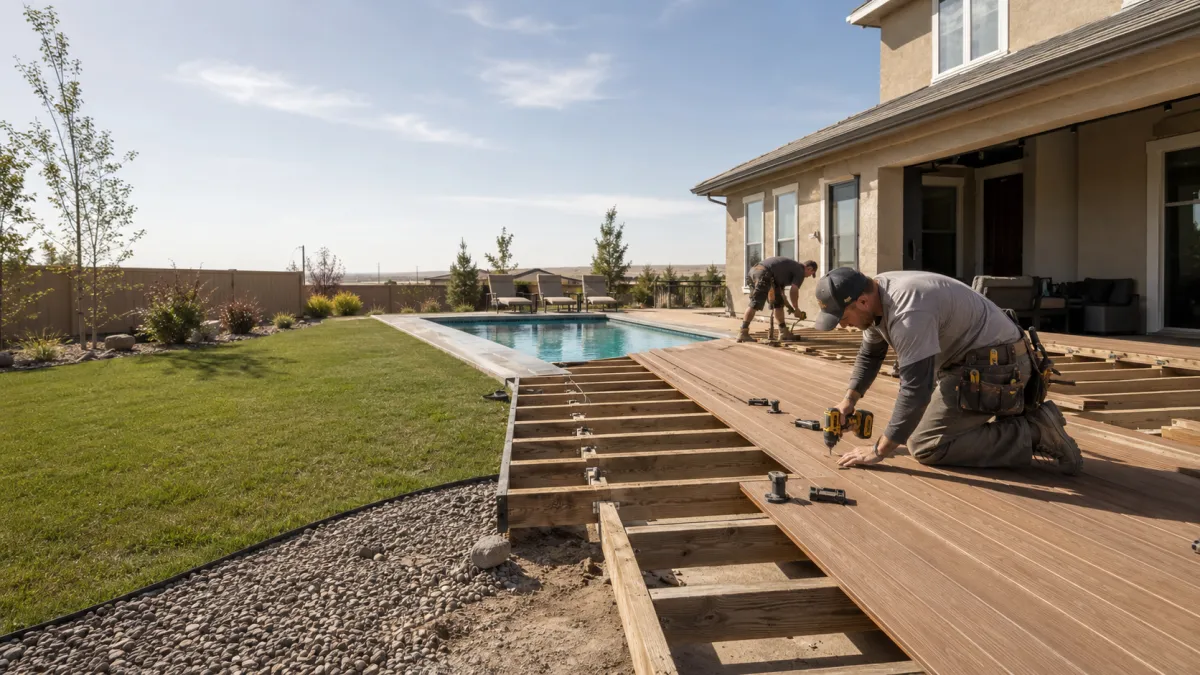
A pool deck must stay grippy when wet and bearable underfoot in full sun.
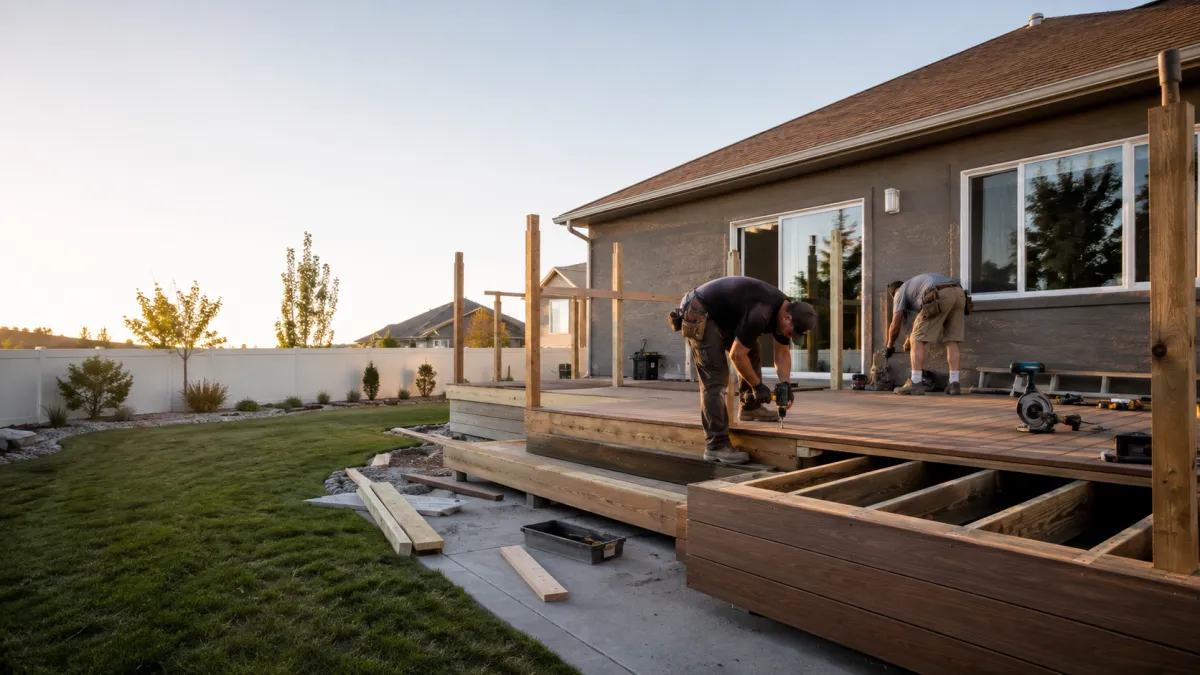
A replacement decides what gets torn out and what framing is still sound.
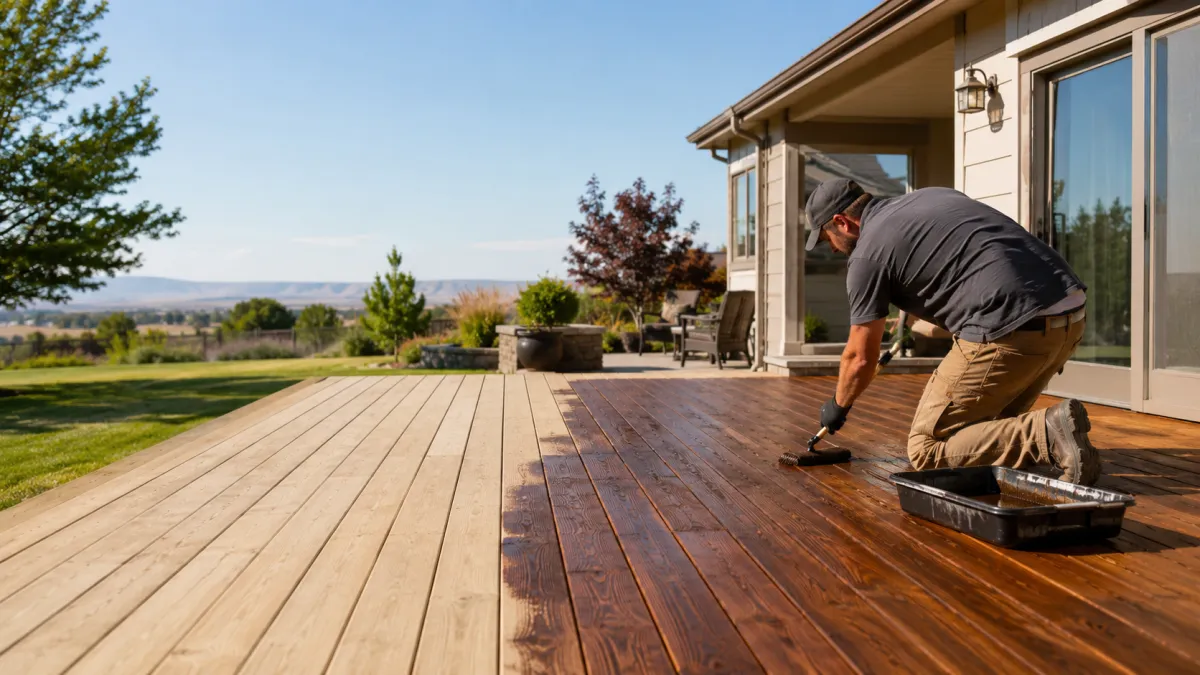
Refinishing strips the failed coating and seals bare wood before summer sun returns.
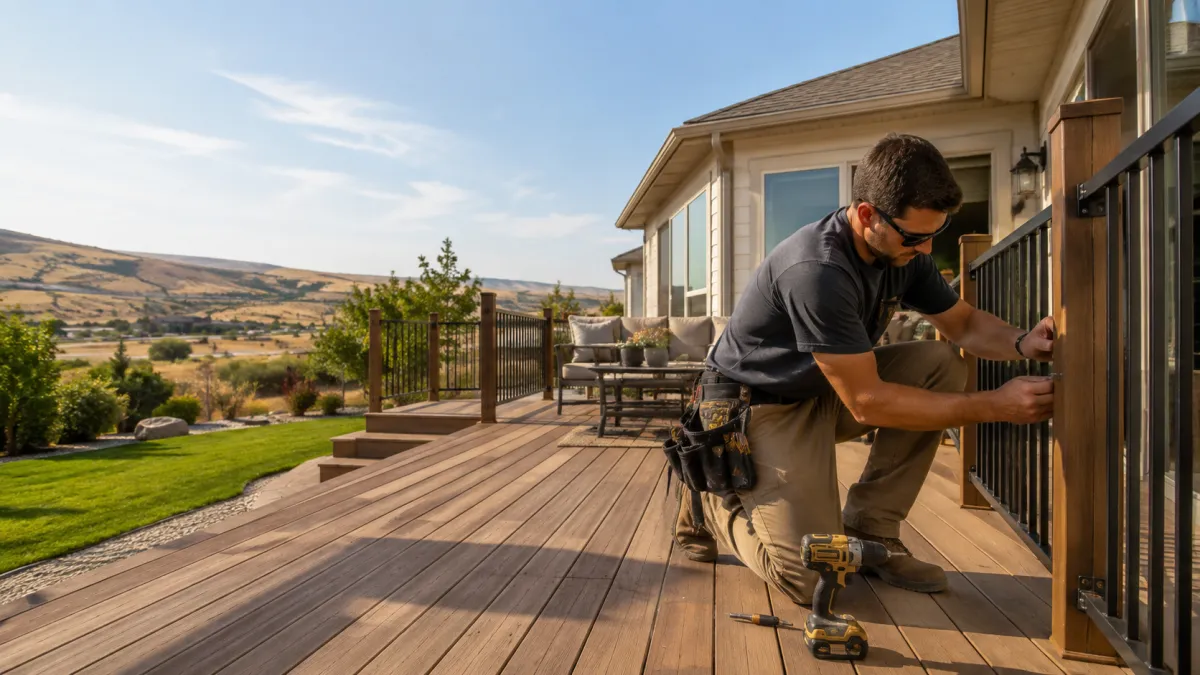
A railing is a safety component whose strength depends on what it fastens to.
A new deck build starts with footings, grade, and the height above ground.
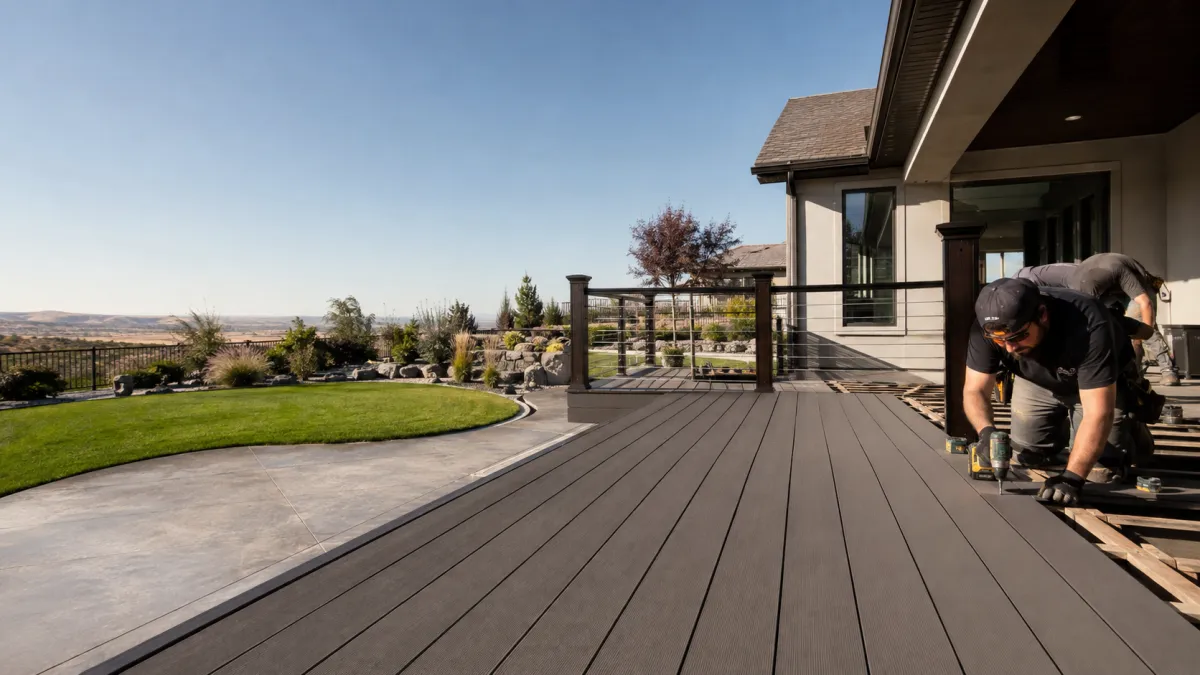
Composite removes the finish schedule but demands correct gapping and hidden fastening.
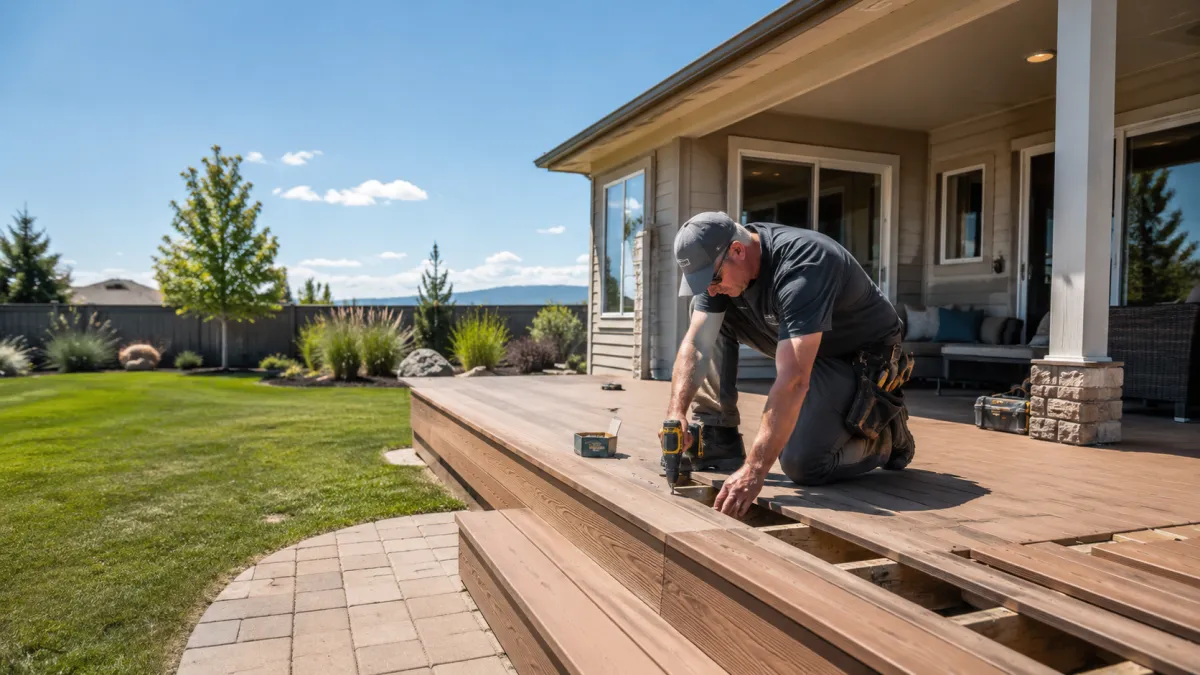
Repair addresses the failed component and leaves sound structure in place.
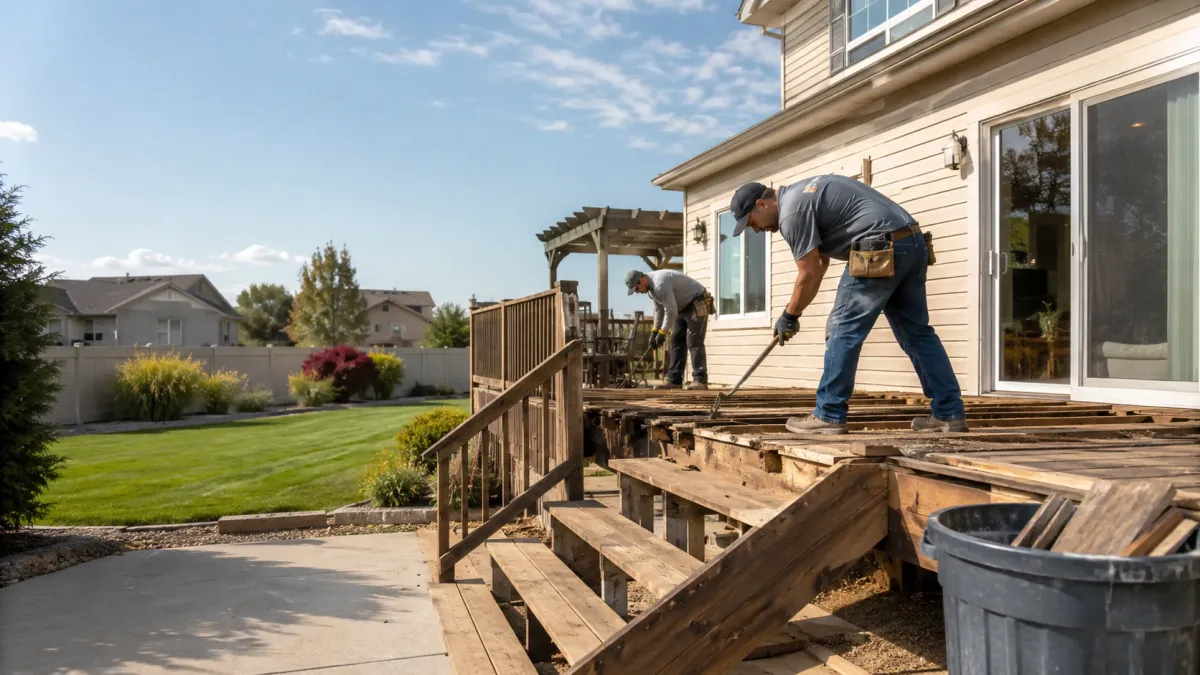
Removal takes out the structure and leaves the site ready for whatever follows.
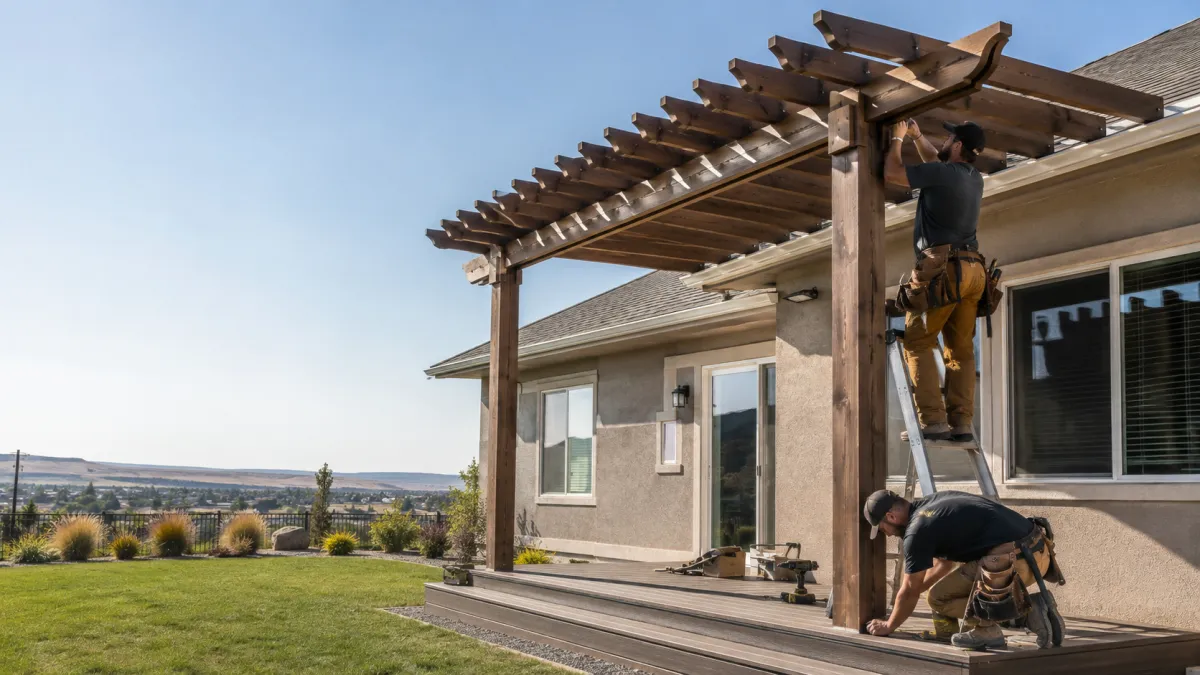
A pergola casts useful shade only if its slats match the sun angle.
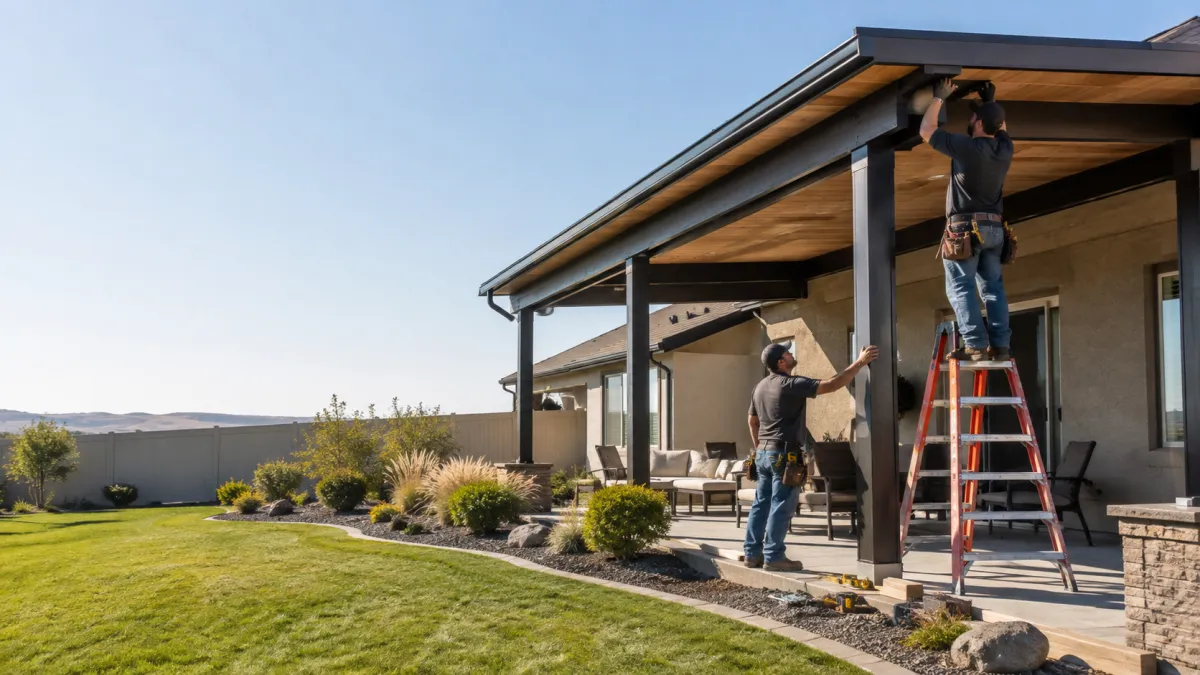
A solid cover blocks sun completely and has to shed water somewhere deliberate.
Deck Service Across the Tri-Cities
Decks built for Pasco sun, dry air, and hard winters.
We work Pasco first and five surrounding communities after it. Two of them are unincorporated, which means county permits rather than a city building department, and one runs a municipal electric utility instead of a PUD. Those differences change the sequence, so we sort them out before scheduling.
Frequently Asked Questions
Deck Contractor can be complex, and we’re here to provide answers to common questions. Here are some frequently asked questions from our clients.
Frequently Asked Questions about deck contractor Pasco WA
How much does a deck cost in Pasco, WA?
There is no single price for a Pasco deck. Cost follows the square footage, the height above grade, whether the framing underneath can be reused, the decking material, and whether the railing is wood, cable, or aluminum. A ground-level platform in an existing footprint and an elevated deck with new footings are not comparable jobs. We price after a walkthrough and measurements, not over the phone.
Do I need a permit to build a deck in Pasco, WA?
It depends on two numbers. Pasco Municipal Code exempts decks under 200 sq ft that also sit under 30 inches above the ground, so a small ground-level platform can go in without a permit. Cross either threshold and you need one from the City of Pasco Building Division, where residential permits run a five to seven business day review. We confirm which side of that line your project falls on before quoting it.
What is the best decking material for hot weather?
For a Pasco summer, the honest answer is that surface color matters more than material category. Lighter boards run cooler underfoot than dark ones, in composite and in wood alike. Composite avoids the annual splintering and checking that dry heat causes in softwood, while a good hardwood or cedar stays cooler than most dark composites. We match the material to how the deck is oriented and how often it is used barefoot.
How do you pick a deck contractor in Pasco?
Ask three things. Whether they build decks specifically or take them alongside fencing and general contracting, whether they will tell you the permit threshold before quoting, and whether their past work is in your climate rather than on the wet side of the state. A crew that cannot answer the permit question in the first conversation has not looked at your project yet.
How long does it take to build a deck in Pasco?
Schedule follows the permit review, the footing and framing inspections, whether concrete has to cure before framing starts, and lead times on decking and railing. A railing replacement on sound framing and a new elevated deck that needs fresh footings sit at opposite ends of that range. We give you the sequence in writing so you can see which steps are ours and which belong to the city.
What is the difference between composite and wood decking?
Wood is cheaper up front and needs a finish schedule. Composite costs more at install and skips the stripping and staining. In this climate the gap widens, because dry heat and hard sun push a softwood deck toward recoating more often than the same deck would need on the coast. The right choice depends on whether you would rather spend the money once or spread it across seasons of maintenance.
Frequently Asked Questions about Composite Deck Installation
What is the difference between composite and wood decking?
Wood costs less to install and needs a recurring finish schedule. Composite costs more up front and skips stripping and staining entirely. In this climate the maintenance gap is wider than average, because hard UV and very low humidity are rough on a softwood finish. The decision is really about whether you would rather spend once or spread it across seasons.
Does composite decking get hot in the sun?
Yes, and in a Pasco summer it matters. Surface temperature tracks color more than brand, so a light board runs considerably cooler than a dark one in the same conditions. If the deck is unshaded and gets used barefoot, we steer toward lighter colors and say why before you choose.
Can composite go over my existing deck framing?
Sometimes, but it has to be checked rather than assumed. Composite is heavier than most softwood decking and generally wants tighter joist spacing. We assess the framing and tell you whether it takes composite as-is, needs joists added, or needs replacing.
Why do composite boards need gaps?
Because they move with temperature more than wood does, and the daily swing here is wide. Boards fastened tight at the ends will push against each other and buckle. The gapping and the hidden fastener system are both there to let the deck move without deforming.
Plan Your Composite Deck
What Our Satisfied Clients Have to Say About Pasco Deck Contractors
We pride ourselves on delivering great results and experiences for each client. Hear directly from home and business owners who’ve trusted us with their Deck Contractor needs.
The Trusted Deck Contractor Expert Near You
Ready to hear more about expert services at Pasco Deck Contractors?
Contact us today to receive a detailed, no-obligation quote.
Serving West Pasco, Riverview, Road 68, Chapel Hill, Broadmoor, Downtown Pasco & Greater Pasco
Mon–Fri 7AM–5PM | Sat 8AM–3PM | Sun Closed


