
Deck Contractor in Burbank, WA
Decks on River Confluence Lots
The single most important thing to know about building a deck in Burbank is that there is no city hall to permit it. Burbank is unincorporated, and although it sits inside the wider metro area it falls in Walla Walla County rather than Benton or Franklin, so building permits are issued by the county rather than by a municipal building department. That changes the submission process and the timeline compared with a project a few miles away in Pasco, and it is the detail most contractors coming from across the river get wrong. Water service is equally unusual, running through a system operated by the Port of Walla Walla rather than a city utility. Geographically, this is a river community sitting at the confluence of the Snake River and the Columbia River, with flat agricultural land around it. Properties with river frontage are the ones where deck demand concentrates, and they are also the ones where the drainage and grade questions have to be answered carefully rather than assumed.
County Permitting, Not a City Hall
This is a small community of roughly 3,499 residents, and the housing reflects that. The stock around Burbank Townsite and the streets near Columbia High School is mostly older single-family, which means deck work here leans toward replacement and repair rather than new construction. On the river-facing lots the situation is different again. Those properties are oriented toward the view, so the deck is often the main outdoor room rather than a back step, and it is typically larger and more elevated than the lot size alone would suggest. Ground conditions near the water and the drainage path off an elevated structure both get assessed on site rather than from a standard detail, because the margin for error on a waterfront lot is smaller.
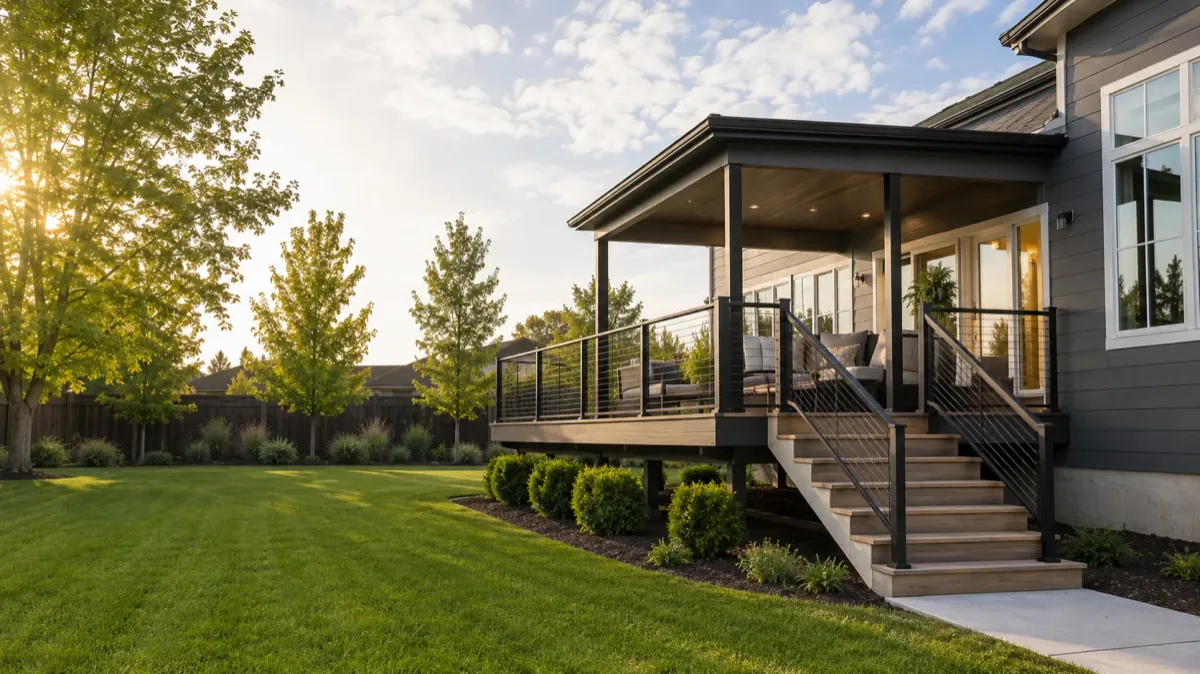
Drainage on Waterfront Properties
Pool decks are less common in Burbank than in the larger cities, and where they do go in it is usually on a rural or river-adjacent parcel with room to spare. That setting changes the priorities. Splash-out water on a property near the river frontage cannot simply be allowed to run to the low side of the lot, because the low side is frequently where the ground is already saturated or where the grade falls toward the water. Drainage gets designed to move water somewhere deliberate. The permit path runs through Walla Walla County rather than a city office, which affects the timeline and is worth building into the schedule from the start. Surface temperature matters as much here as anywhere else in the area, since these are open agricultural-edge lots with little shade, and board color drives how usable the surround is through a summer afternoon.
Walla Walla County Building Requirements
Replacement is the bulk of what we do in Burbank, and the reason is the age of the housing around Burbank Townsite and the Maple Street area. Decks on that stock have generally been through several decades. On river-facing lots there is an additional factor worth checking that does not apply inland: ground moisture near the water keeps the base of a post damp for longer than the dry conditions elsewhere in the area would suggest, so post rot at grade develops faster than a homeowner expects. We probe posts at the contact point as a matter of course rather than judging from what is visible above. Where the deck is elevated to catch the river view, the height puts the rebuild firmly into permit territory with Walla Walla County, and railing requirements are decided by that height rather than by preference.
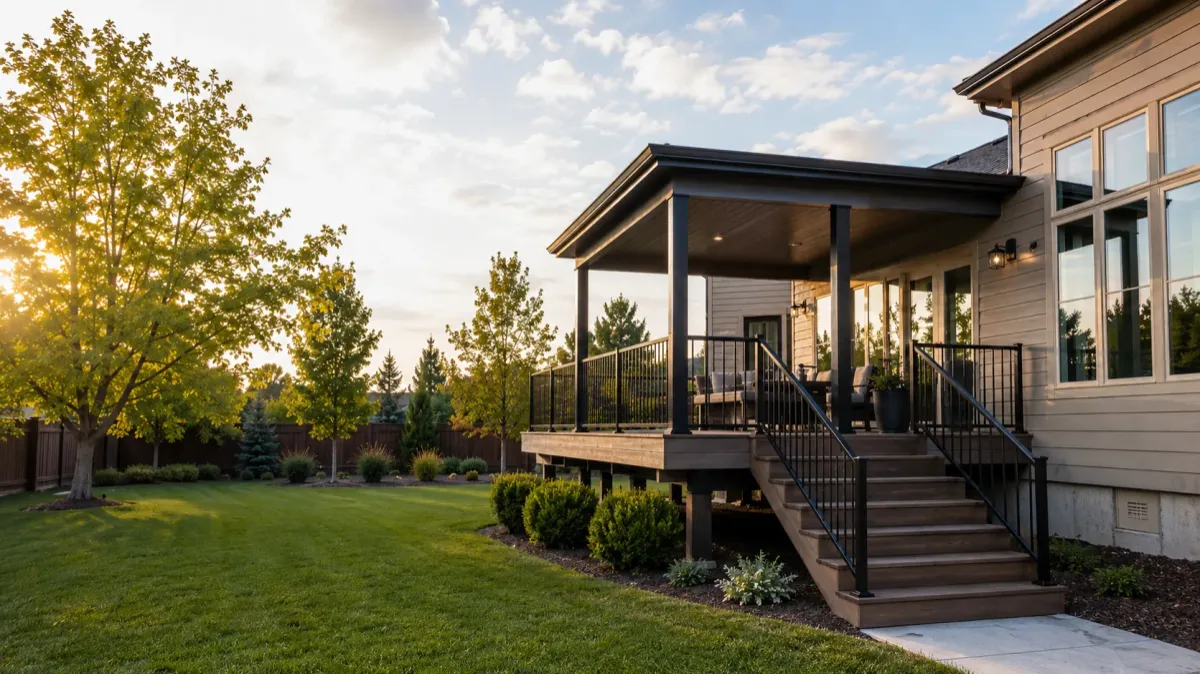
Water Service Through the Port of Walla Walla
Refinishing decks in Burbank means dealing with two things at once. The sun does what it does everywhere in this area, breaking down a softwood finish faster than moisture ever would, and on the flat open ground around the community there is very little to shade a deck from it. Closer to the Snake River and the Columbia River frontage there is more ambient moisture at ground level than the surrounding agricultural land would suggest, which affects how the underside of a low deck dries out and can leave the boards nearest the water in worse condition than the rest. We assess the whole surface rather than sampling one corner, replace boards that have gone past sanding, and time the work for spring or the cool end of fall so the finish penetrates instead of setting on contact.
Decks built for Pasco sun, dry air, and hard winters.
Proudly serving Pasco, Kennewick, Richland, West Richland, Burbank and Finley for 12+ years.
Comprehensive Deck Contractor Services in Pasco
Tailored to Your Needs
Ten services, from a full pool deck build down to a railing swap or a season of stain. Every one of them starts the same way: we look at what the structure sits on, how high it stands above grade, and what the sun does to that side of the house through a Tri-Cities summer.
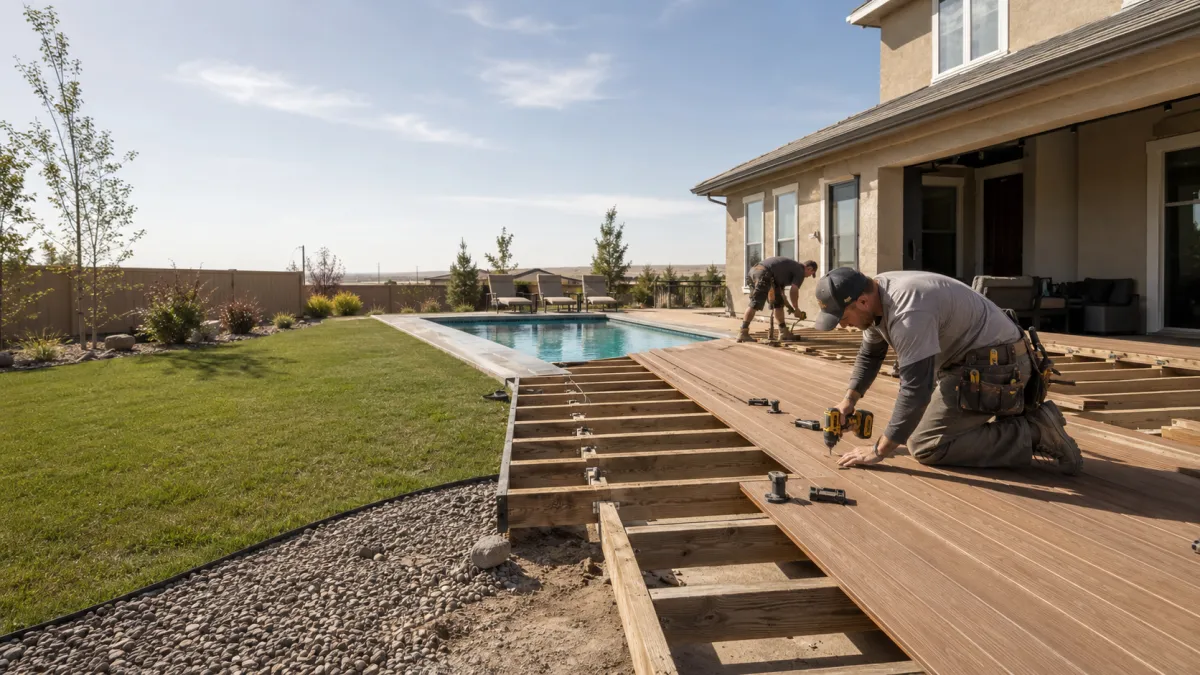
A pool deck must stay grippy when wet and bearable underfoot in full sun.
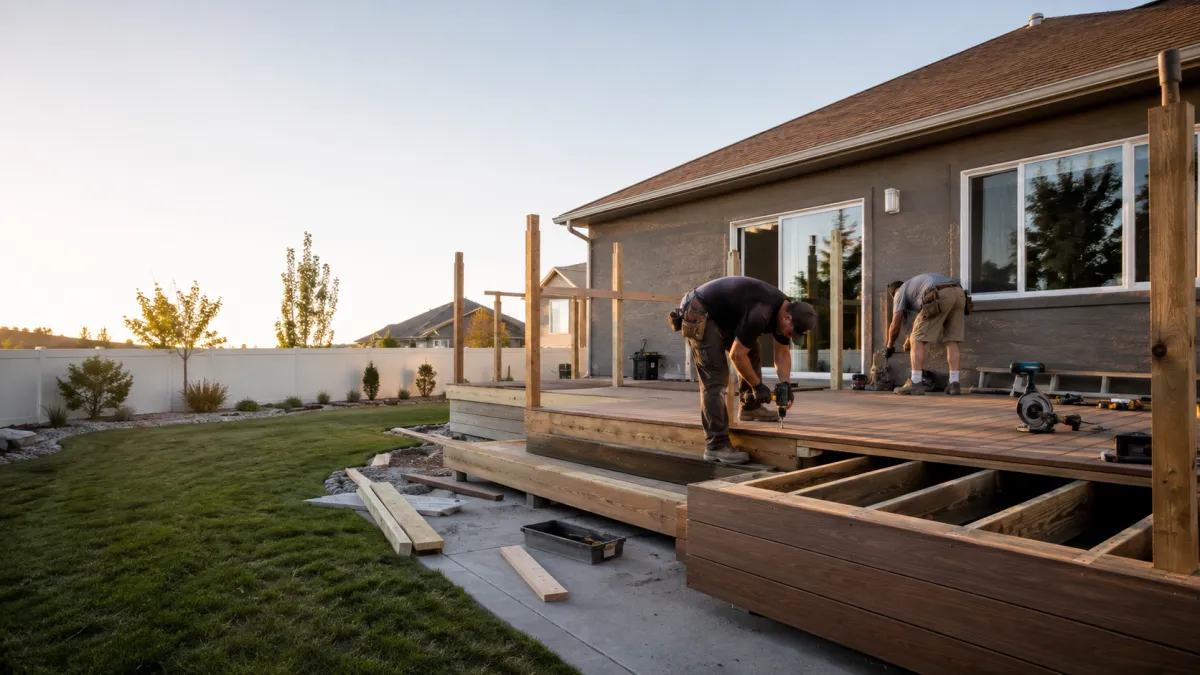
A replacement decides what gets torn out and what framing is still sound.
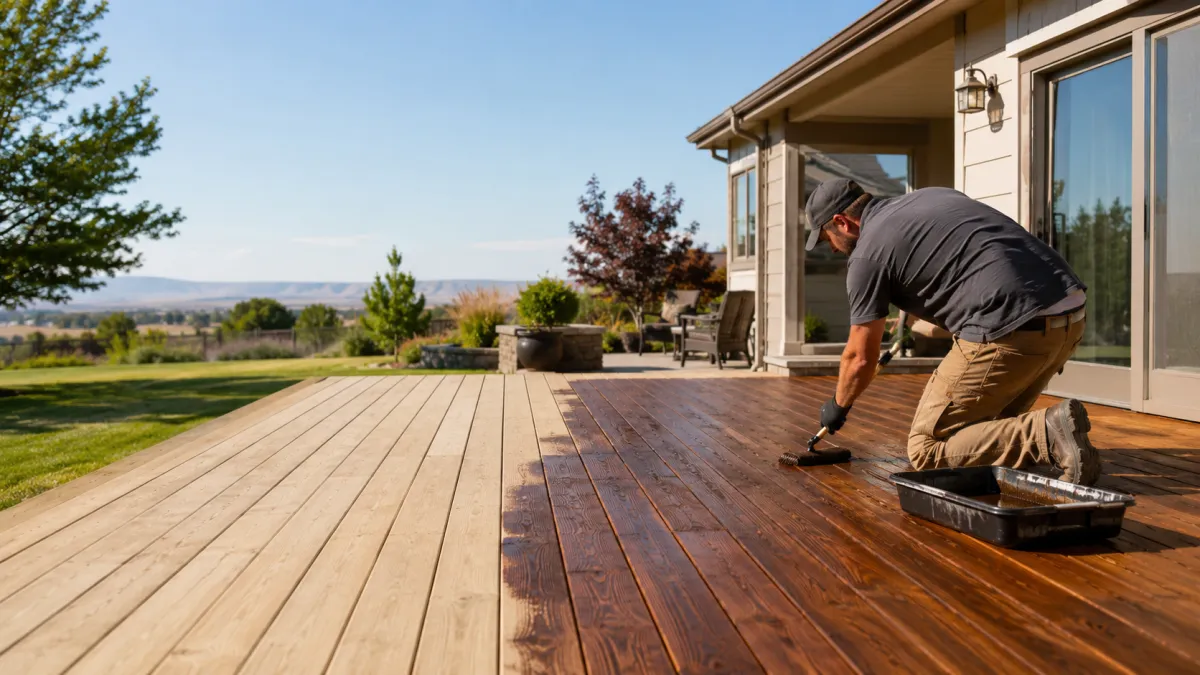
Refinishing strips the failed coating and seals bare wood before summer sun returns.
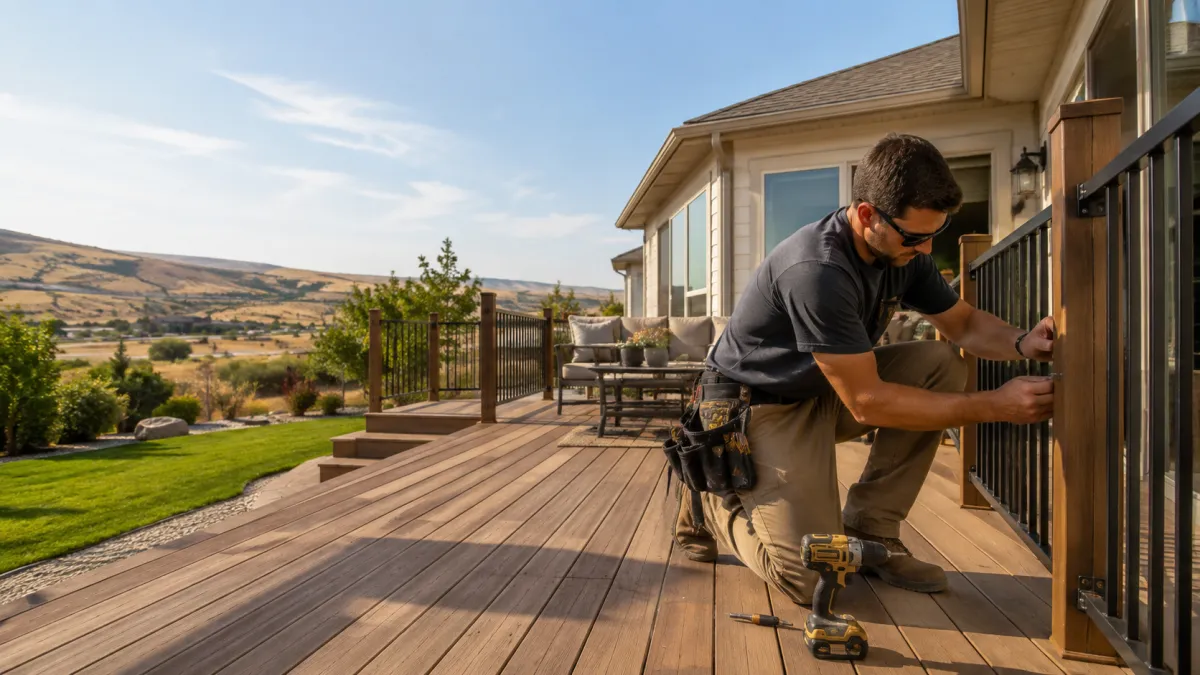
A railing is a safety component whose strength depends on what it fastens to.
A new deck build starts with footings, grade, and the height above ground.
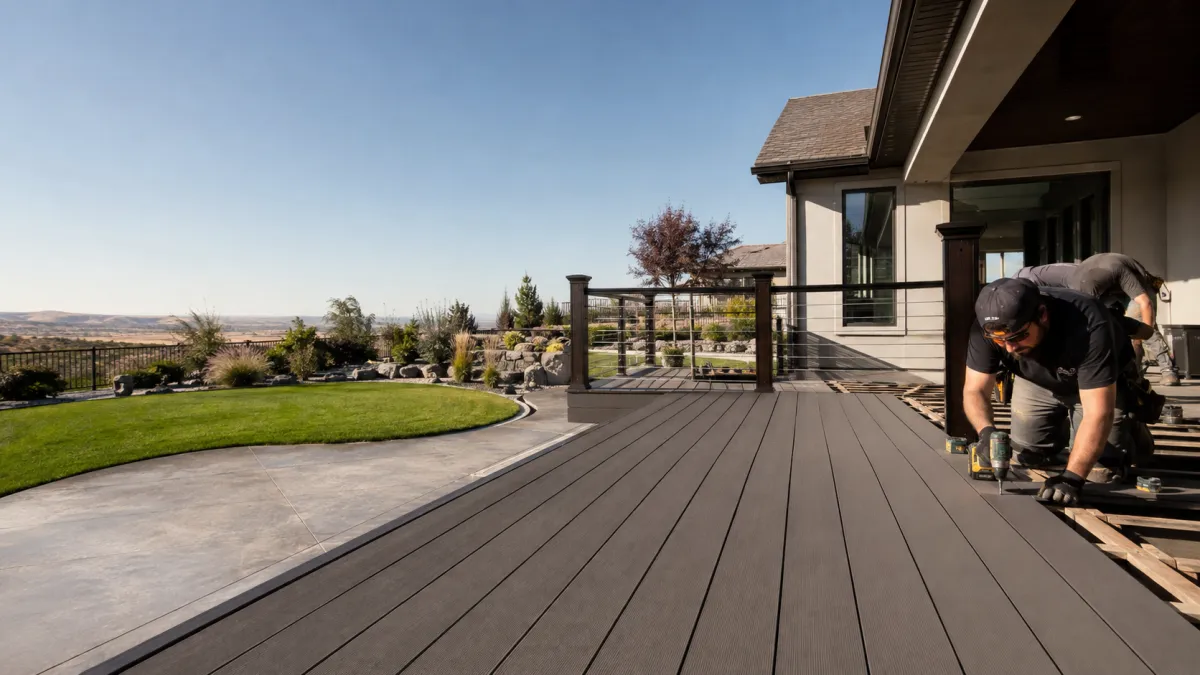
Composite removes the finish schedule but demands correct gapping and hidden fastening.
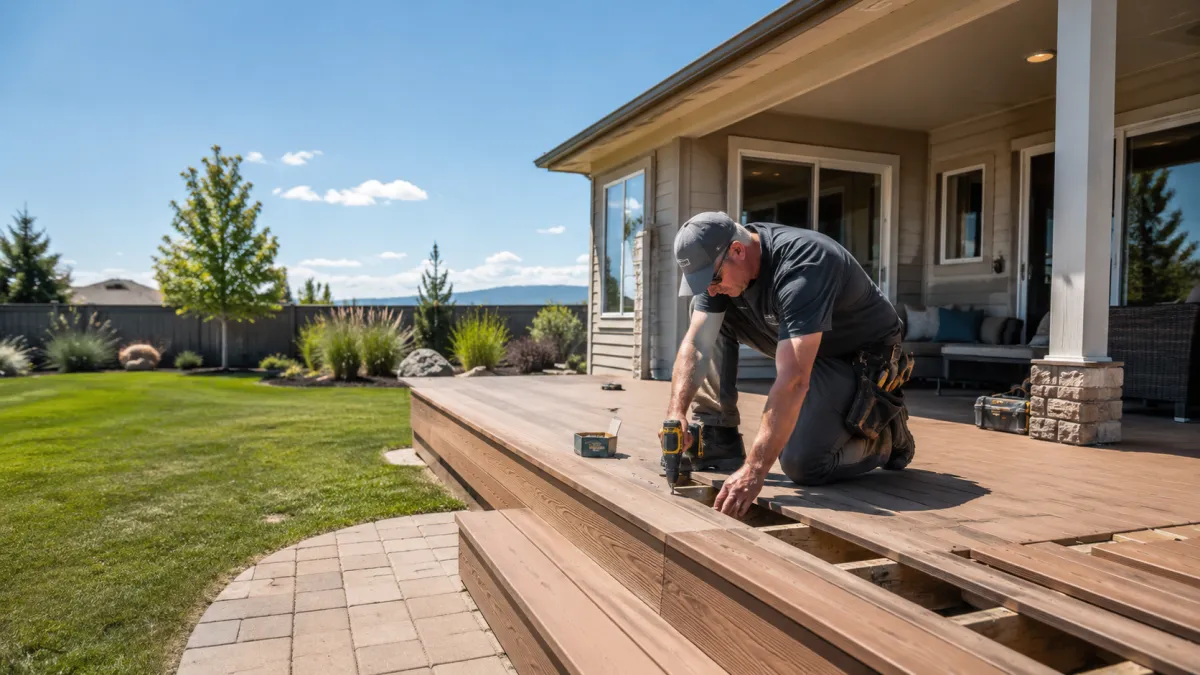
Repair addresses the failed component and leaves sound structure in place.
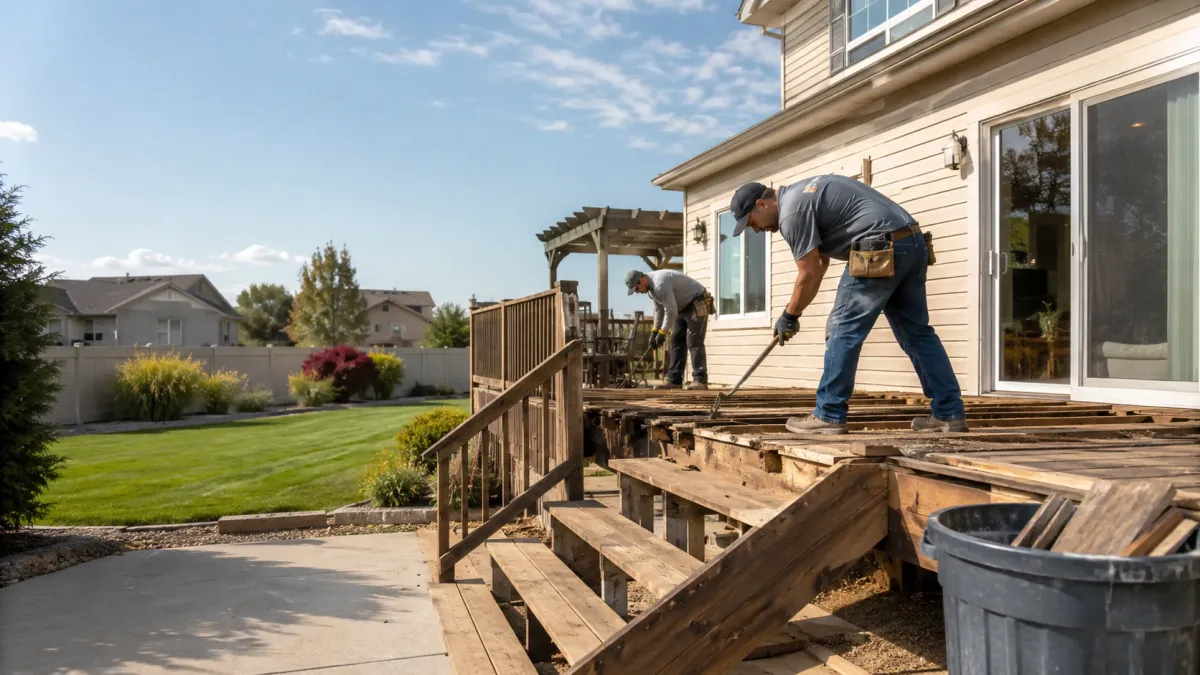
Removal takes out the structure and leaves the site ready for whatever follows.
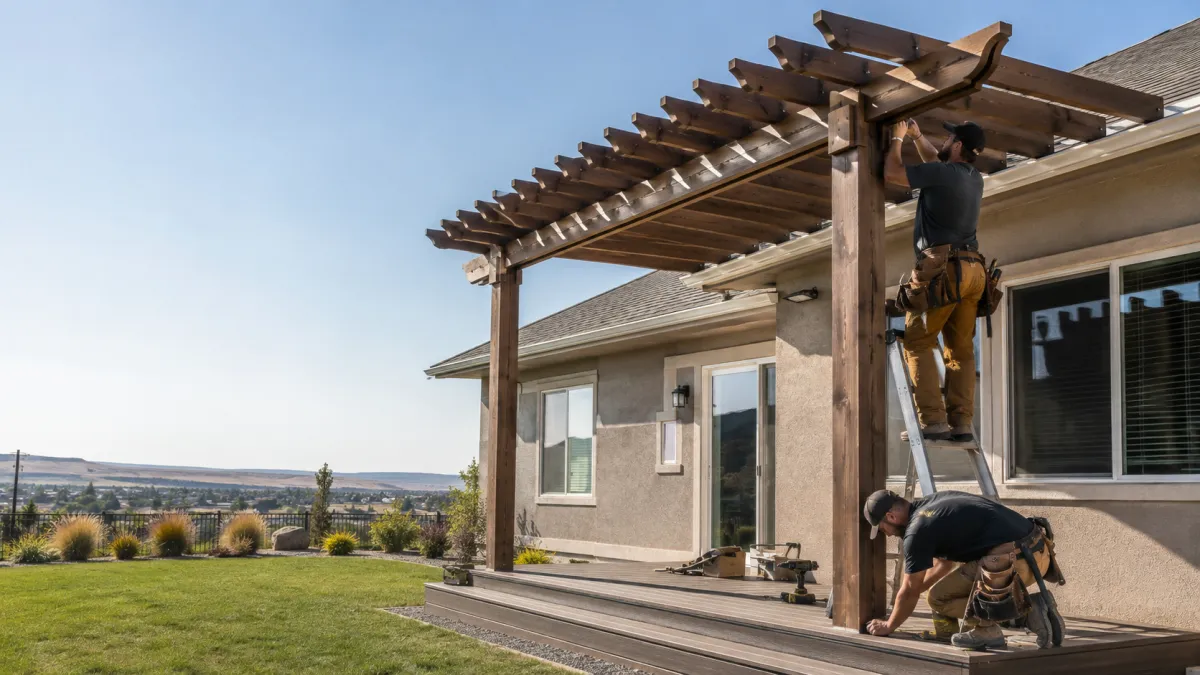
A pergola casts useful shade only if its slats match the sun angle.
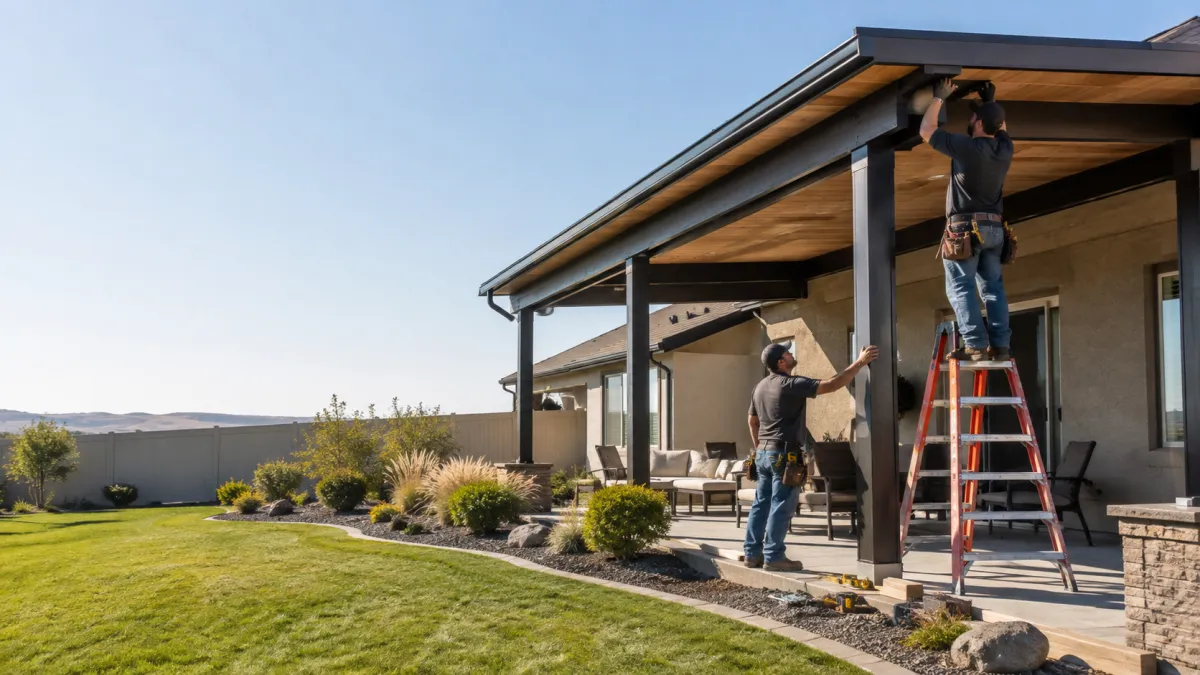
A solid cover blocks sun completely and has to shed water somewhere deliberate.
Frequently Asked Questions
Deck Contractor can be complex, and we’re here to provide answers to common questions. Here are some frequently asked questions from our clients.
Frequently Asked Questions about deck contractor Pasco WA
How much does a deck cost in Pasco, WA?
There is no single price for a Pasco deck. Cost follows the square footage, the height above grade, whether the framing underneath can be reused, the decking material, and whether the railing is wood, cable, or aluminum. A ground-level platform in an existing footprint and an elevated deck with new footings are not comparable jobs. We price after a walkthrough and measurements, not over the phone.
Do I need a permit to build a deck in Pasco, WA?
It depends on two numbers. Pasco Municipal Code exempts decks under 200 sq ft that also sit under 30 inches above the ground, so a small ground-level platform can go in without a permit. Cross either threshold and you need one from the City of Pasco Building Division, where residential permits run a five to seven business day review. We confirm which side of that line your project falls on before quoting it.
What is the best decking material for hot weather?
For a Pasco summer, the honest answer is that surface color matters more than material category. Lighter boards run cooler underfoot than dark ones, in composite and in wood alike. Composite avoids the annual splintering and checking that dry heat causes in softwood, while a good hardwood or cedar stays cooler than most dark composites. We match the material to how the deck is oriented and how often it is used barefoot.
How do you pick a deck contractor in Pasco?
Ask three things. Whether they build decks specifically or take them alongside fencing and general contracting, whether they will tell you the permit threshold before quoting, and whether their past work is in your climate rather than on the wet side of the state. A crew that cannot answer the permit question in the first conversation has not looked at your project yet.
How long does it take to build a deck in Pasco?
Schedule follows the permit review, the footing and framing inspections, whether concrete has to cure before framing starts, and lead times on decking and railing. A railing replacement on sound framing and a new elevated deck that needs fresh footings sit at opposite ends of that range. We give you the sequence in writing so you can see which steps are ours and which belong to the city.
What is the difference between composite and wood decking?
Wood is cheaper up front and needs a finish schedule. Composite costs more at install and skips the stripping and staining. In this climate the gap widens, because dry heat and hard sun push a softwood deck toward recoating more often than the same deck would need on the coast. The right choice depends on whether you would rather spend the money once or spread it across seasons of maintenance.
Still Have Questions About deck contractor Pasco WA?
Speak With a Trusted Deck Contractor Expert Today.
What Our Satisfied Clients Have to Say About Pasco Deck Contractors
We pride ourselves on delivering great results and experiences for each client. Hear directly from home and business owners who’ve trusted us with their Deck Contractor needs.
The Trusted Deck Contractor Expert Near You
Ready to hear more about expert services at Pasco Deck Contractors?
Contact us today to receive a detailed, no-obligation quote.
Serving West Pasco, Riverview, Road 68, Chapel Hill, Broadmoor, Downtown Pasco & Greater Pasco
Mon–Fri 7AM–5PM | Sat 8AM–3PM | Sun Closed


